AI Photo Booths for Brand Activations: How They Work, What They Cost, Real Examples
What an AI photo booth is, the main types, what drives the cost, how to measure results, and how to handle face data in Indonesia. With examples from Tavi, Laneige and Guinness.
In this article
Photo booths are at almost every event now, and that is exactly why a regular one rarely makes people stop. An AI photo booth is different because it reads the visitor: skin tone, movement, expression or the product in their hand, and gives back something that feels made for that one person.
This guide sums up what we have learned building AI booths for brands such as Tavi, Laneige, La Roche-Posay, CeraVe and Guinness.
What is an AI photo booth?
An AI photo booth is an interactive booth that uses a camera and an AI model (usually computer vision) to understand something about the visitor and respond personally. The end result is not always a photo. It can be a product recommendation, an analysis, an illustration, a game score or a moment made for sharing.
How it compares with a regular booth:
| Regular photo booth | AI photo booth | |
|---|---|---|
| What it does | Takes and prints a photo | Reads face, movement or product, then responds |
| What the visitor gets | The same photo format for everyone | A personal result (recommendation, analysis, illustration) |
| Reason to queue | A souvenir | Curiosity: "what will mine say?" |
| Data for the brand | Number of photos | A full funnel: passed by, tried, completed |
Five types of AI photo booth
1. Personal analysis (colour, skin, style)
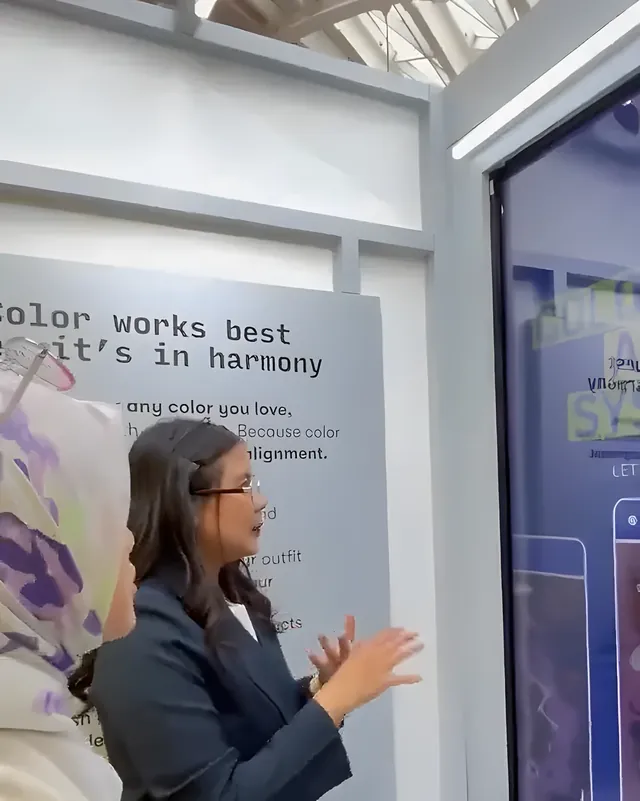
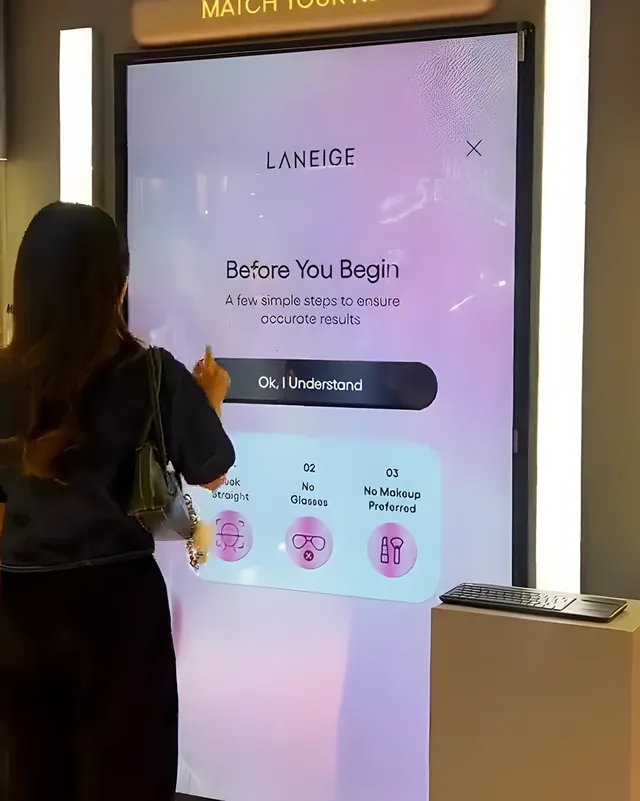
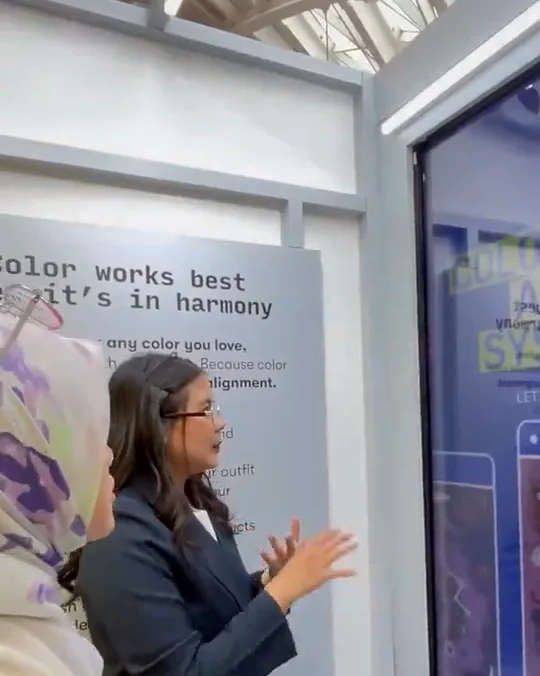
TaviSee the project →The booth reads skin and outfit colours and recommends matching products. For Tavi, the AI reads each visitor's face tone and outfit colour, matches them with Tavi lip products and hands them a personalised illustration based on their personality. Laneige used a 12-season personal colour system linked to real-time colour try-on and product recommendations: more than 19,000 visitors with a 32% engagement rate.
2. Educational cameras (UV, skin)
La Roche-PosaySee the project →A special camera shows something people normally cannot see. La Roche-Posay used a UV camera with real-time tracking to get people curious about their own UV exposure: more than 103,000 passed by, 5,000 stopped and 589 completed an analysis. CeraVe added a UV camera mirror that shows how evenly sunscreen actually covers the skin.
3. Triggered by movement or objects
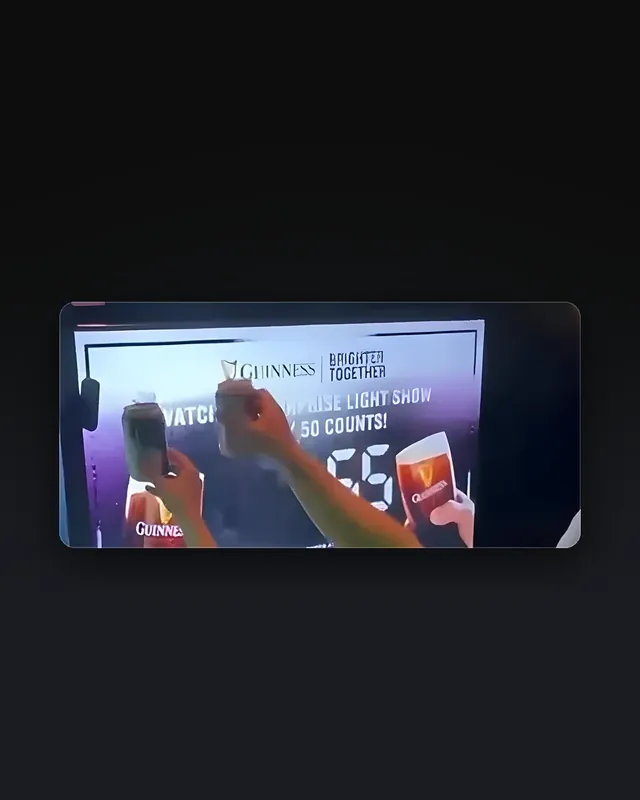
GuinnessSee the project →No touchscreen: the booth reacts to something people do naturally. At a Guinness event, a computer vision model we trained counts raised Guinness glasses; every few raises trigger a celebration on screen. Detection reached 99% accuracy in a packed bar, even with glasses partly covered by hands.
4. Product recognition
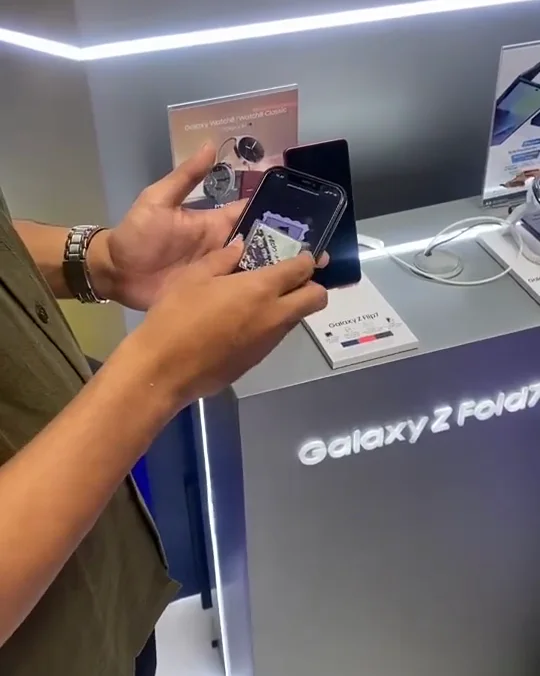
CeraVeSee the project →Put a product on the table and the screen instantly explains its benefits and how to use it. We built a table like this for CeraVe, so people learn while holding the product.
5. AI plus people
 FMCGSee the project →
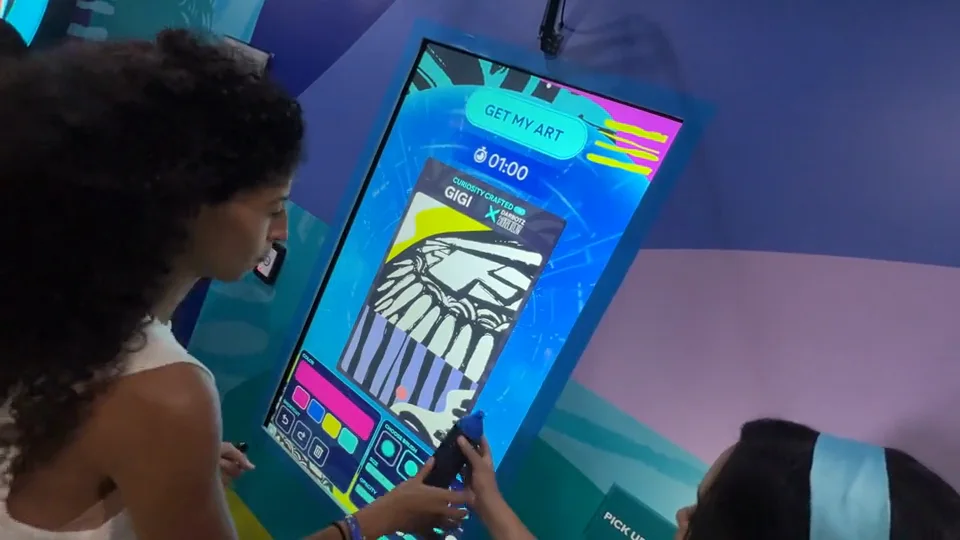
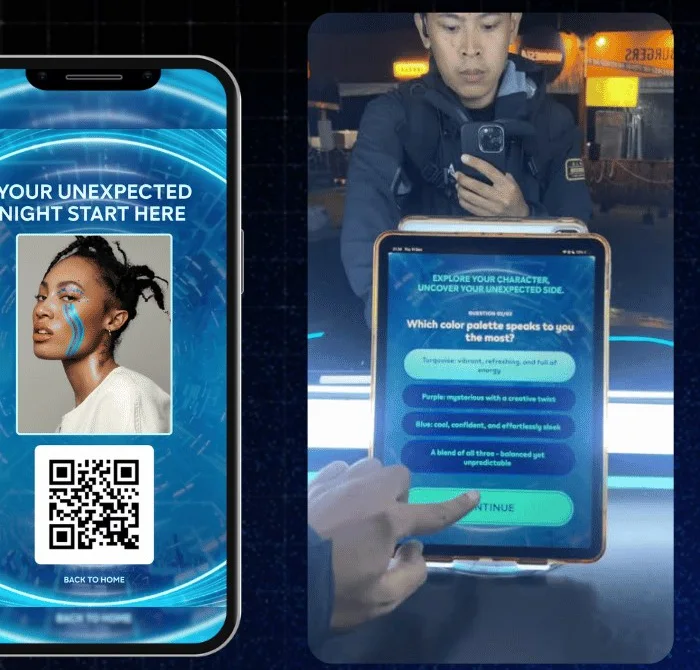
The AI suggests, a person delivers. At the Unexpected Makeover booth, visitors take a selfie and answer a personality quiz, the system suggests a surprising makeover, and a stylist does it on site: 859 participants in three days.
How an AI photo booth works
Almost every AI booth follows the same flow:
- Trigger: the visitor walks up, poses, lifts something or scans a QR.
- Camera and model: the camera captures, the model analyses face, colour, movement or object.
- Personal result: the screen shows a recommendation, illustration, score or processed photo.
- Take-home: the result goes to the phone by QR or is printed on the spot.
- Data: every interaction is logged to a dashboard for the brand team.
What drives the cost
Prices vary a lot, so it is more useful to know what pushes them up or down:
| Factor | Leaner | Heavier |
|---|---|---|
| AI model | An existing model, adapted | A model trained for you (e.g. to recognise your products) |
| Hardware | Standard screen and camera | Custom kiosk, special cameras (UV, depth), booth fabrication |
| Content | Brand-adapted templates | Bespoke illustration, animation and copy |
| Scale | One venue, a few days | Several cities, several months |
| Integration | Results by QR | Connected to CRM, loyalty or e-commerce |
| Operations | Brand provides staff | Operators, on-call technicians and daily maintenance |
The most effective way to control cost: pick one main goal (awareness, product education or customer data) and design the booth for that goal only.
How to measure success
Don't stop at "how many people came". Measure the funnel:
- People passing by (cameras can count them)
- People who stop and start interacting
- People who complete the experience
- People who take something home (scan, print, share)
- Follow-through: site visits, purchases or member sign-ups
La Roche-Posay's funnel above (103,000 passing, 5,000 stopping, 589 analyses) tells a far more honest story than a single "visitors" number.
Face data and Indonesia's data protection law
A booth that processes faces handles personal data. Indonesia has the Personal Data Protection Law (UU No. 27 of 2022). What we recommend:
- Ask for clear consent before the camera analyses anyone.
- Explain what the data is for, in plain words on screen.
- Process on the device where possible and don't keep face images longer than needed.
- Keep analytics (counts, durations) separate from anything that identifies a person.
Checklist before you book an AI photo booth
- What is the one thing visitors should feel or take home?
- How long is a session? Aim for under two minutes so the queue keeps moving.
- What is the lighting like at the venue? AI cameras are very sensitive to it.
- Is there stable power and internet, or do you need an offline mode?
- Who runs the booth and handles technical issues on site?
- What data does the team want to see after the event?
People queue for something that feels made for them.
If you are planning an activation with AI, see our AI & computer vision projects or tell us about your brief.
Frequently asked questions
What is the difference between an AI photo booth and a regular photo booth?
A regular photo booth takes a picture and prints it. An AI photo booth reads something about the visitor, such as skin tone, movement or the product they are holding, and gives them a result made for them: a product recommendation, an illustration, a score or a photo that reacts to how they move.
How long does it take to prepare an AI photo booth?
It depends on how custom it is. An existing system restyled for your brand is much faster. A model trained for your case, for example to recognise your products, needs extra time to collect data, train and test in the real venue conditions.
Does an AI photo booth need internet?
Not always. Processing can run on the device so the booth keeps working when the venue signal is weak. Internet is usually only needed to send results to visitors' phones by QR, email or WhatsApp, and for a live dashboard.
Is it safe to process visitors' faces?
It can be, if it is designed properly. Indonesia's Personal Data Protection Law (UU No. 27 of 2022) applies. Ask for clear consent, explain the purpose, keep only what you need, and delete face images once they are no longer required.
What kind of event suits an AI photo booth?
Places with a lot of foot traffic: malls, festivals, concerts, exhibitions and product launches. The key is a result that is personal and fast, because people queue for something that feels made for them.