Hologram Display for Events: Types, Uses and How to Plan One
How a hologram display for events works, the main types, where it fits at launches, exhibitions and stores, and how to add an AI assistant that talks back.
In this article
A hologram display for events is a screen or glass tube that shows a moving 3D figure, product or logo that seems to float in the air. It pulls people in from across a hall, and with an AI assistant inside, it can also listen and answer. This guide covers the main types, where they work, and how to plan one that does more than look good.
See our hologram display service.
What a Hologram Display Is
In events and retail, "hologram" usually means an illusion, not a laser hologram from a lab. The display makes a bright image appear to hang in space, inside a glass tube or in front of a dark background. To a visitor walking past, it reads as a 3D object, and that is enough to make them stop and look.
The image can be a product turning slowly, a brand character, a presenter or a logo. The best ones have a role beyond decoration: they explain, they guide or they answer.
The Main Types
| Type | How it looks | Best for |
|---|---|---|
| Hologram tube | A figure standing inside a floor-standing glass cylinder | Brand characters, AI assistants, flagship stores |
| Transparent screen | Video on clear glass, with the space behind still visible | Product reveals, window displays |
| Reflective pyramid or box | A small 3D image inside a glass box on a table | Small products, counters, exhibitions |
| LED fan display | A spinning LED blade that seems to draw an image in the air | Logos and short loops seen from a distance |
| Stage projection | A life-size figure projected onto a stage | Keynotes, concerts, launch shows |
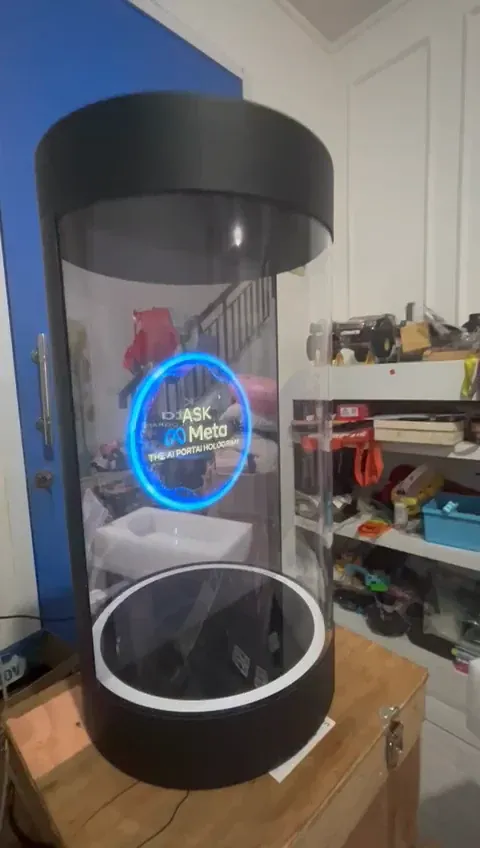
For a booth or a store, a floor-standing tube is the most flexible. It sits at eye level, works with a voice assistant, and visitors can walk right up to it.
Where a Hologram Display Fits
- Product launches. A character or a 3D product explains the features while staff handle the crowd.
- Exhibitions and expos. It becomes the point people mention when they tell colleagues which booth to visit.
- Flagship stores. A permanent unit greets visitors and answers common questions.
- Malls and lobbies. A guide that answers "where is" and "what is" questions without a queue at the desk.
If the goal is foot traffic at a short event, a strong visual is enough. If the goal is understanding or sales, give the hologram something to say.
Adding an AI Assistant That Talks Back
A silent hologram is a moment. A hologram that answers questions is a conversation. The setup usually has four parts:
- The character. Designed for the brand, with idle, listening and answering states so it never looks frozen.
- Voice in and out. A microphone picks up the question, speech recognition turns it into text, and a natural voice replies.
- Knowledge. The assistant answers from the brand's product and store information, and is limited to that scope, so it does not guess.
- Analytics. Questions are logged, without names, so the brand learns what people actually ask.
Because voices are processed, the station should show a short notice before it listens. Under UU PDP No. 27/2022 the purpose, the retention period for recordings and transcripts, and who can access them should be clear before launch.
A Real Example
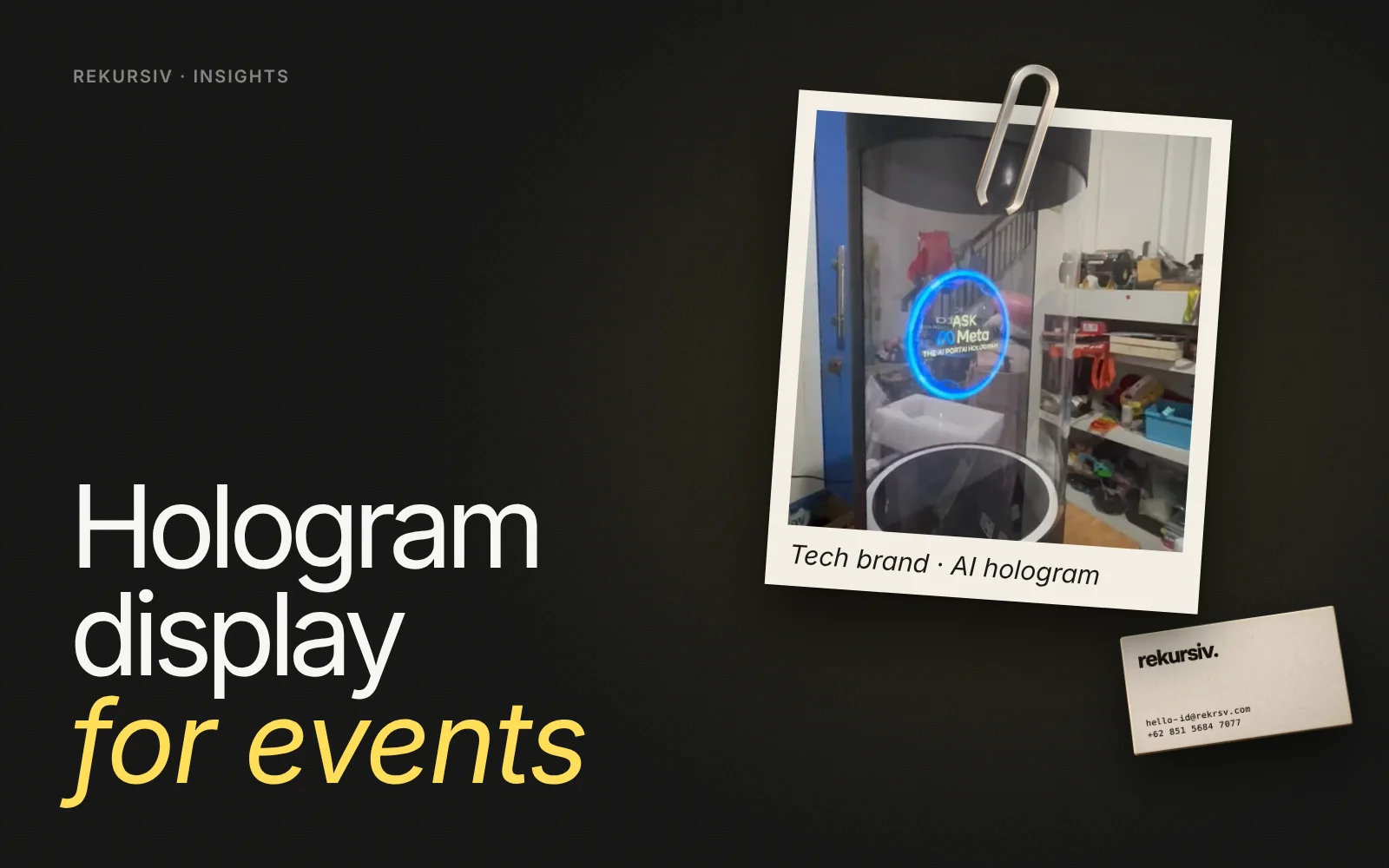
For a tech brand, we built an AI portal hologram: a floor-standing hologram tube in a store. Visitors ask a question out loud and the AI assistant answers from inside the glass, with its own animated presence. The project covered the hologram display, the voice AI assistant and the store installation.
The idea behind it was simple: let people meet an AI assistant in person, not just on a phone. The display draws people in from across the store, and the conversation gives them a reason to stay. Every question also becomes a record of what shoppers want to know, which helps the brand improve product information and staff briefings.
What to Plan Before You Book
- Purpose. Attention, explanation, guidance or lead capture. Each needs different content.
- Location. Light, noise and walking routes affect both visibility and voice recognition.
- Duration. One event or a permanent unit, which changes the hardware and support plan.
- Language. Indonesian, English or both.
- Connectivity. An AI assistant needs a stable connection, so test it on site before launch.
- Hand-off. Decide when the hologram passes a visitor to a human, for example to book a demo.
For more booth formats, see our guide to booth ideas.
How to Start
Begin with one sentence: what should a visitor know or do after talking to the hologram? From there we design the character, the answers and the installation, then test it on site before the doors open. Tell us about your event or store.
Frequently Asked Questions
What is a hologram display for events?
A display that shows a moving 3D image that seems to float in the air or inside a glass tube, used at launches, exhibitions, malls and stores to draw attention and explain a product.
Is an event hologram a real hologram?
Usually not in the scientific sense. Most event holograms are optical illusions made with transparent screens, reflective glass or spinning LED fans. To a visitor it still looks like a 3D figure in the air, which is what matters for attention.
Can a hologram talk to visitors?
Yes. With an AI voice assistant inside, visitors ask a question out loud and the character answers, in Indonesian or English, using the brand's product and store information.
Can we rent a hologram display for one event?
Yes. A hologram can run for a single event or launch, or stay in a store as a permanent unit. The content and the assistant's knowledge are planned the same way in both cases.
Does a talking hologram collect personal data?
It can, because it processes voices and sometimes camera images. Under Indonesia's UU PDP No. 27/2022 you need a clear notice, a stated purpose and a plan for how long recordings and transcripts are kept.
Sources
Project figures from rekursiv case studies
- AI portal hologram Tech brand