Skin Analyzer for Beauty Retail: How It Works and How to Use It in Store
How a skin analyzer for beauty retail works, what it can measure, where it fits in a store or event, and how to plan one that turns visitors into data.
In this article
A skin analyzer for beauty retail is a camera station that looks at a shopper's skin, shows them something they cannot see in a normal mirror, and connects that result to the right products. Done well, it turns a counter or a booth into a short, personal consultation, and gives the brand data on every step.
See our AI skin analyzer service.
What a Skin Analyzer Does
A skin analyzer combines a camera, lighting and an AI model. The visitor stands in front of a screen, the camera captures their face, and the system returns a result in seconds. In skincare, the most convincing results are the ones people cannot see on their own: UV exposure on the face, or how evenly their sunscreen actually covers them.
The result is not the end of the experience. It is the start of a conversation: "this is what we found, this is the product that addresses it, this is how to use it."
What It Can Measure
| Result | What the visitor sees | Where it leads |
|---|---|---|
| UV exposure | Areas of the face with sun damage the eye cannot see | Sunscreen and after-sun products |
| Sunscreen coverage | Spots the sunscreen missed | How to apply, how much, how often |
| Visible skin concerns | A simple profile mapped to the brand's range | A short routine of 2 to 3 products |
| Session data | Nothing, this is for the brand | Passersby, stops, analyses and take-homes per location |
What a brand chooses to measure should follow its range. A sun care brand needs a strong UV result. A brand with a wider range needs a clear mapping from each result to a product, which the brand's own experts sign off.
A Tool for Advice, Not a Diagnosis
A retail skin analyzer is an education and recommendation tool. It shows visible signs and guides a shopper to a product, and it should never claim to diagnose a skin condition. Keep the wording on screen simple and positive, and let beauty advisors take the conversation further.
How a Good in-Store Flow Works
- Attract. The station senses someone walking past and responds on screen, so people stop.
- Invite. One clear line explains what they will see, and a consent step comes before any scan.
- Analyse. The scan takes seconds. The result is visual, not a page of numbers.
- Recommend. The result maps to two or three products, with how to use them.
- Take home. A QR code or print carries the result and the routine home.
- Count. Every step is logged, so the brand sees where people drop off.
Real Results from Our Projects
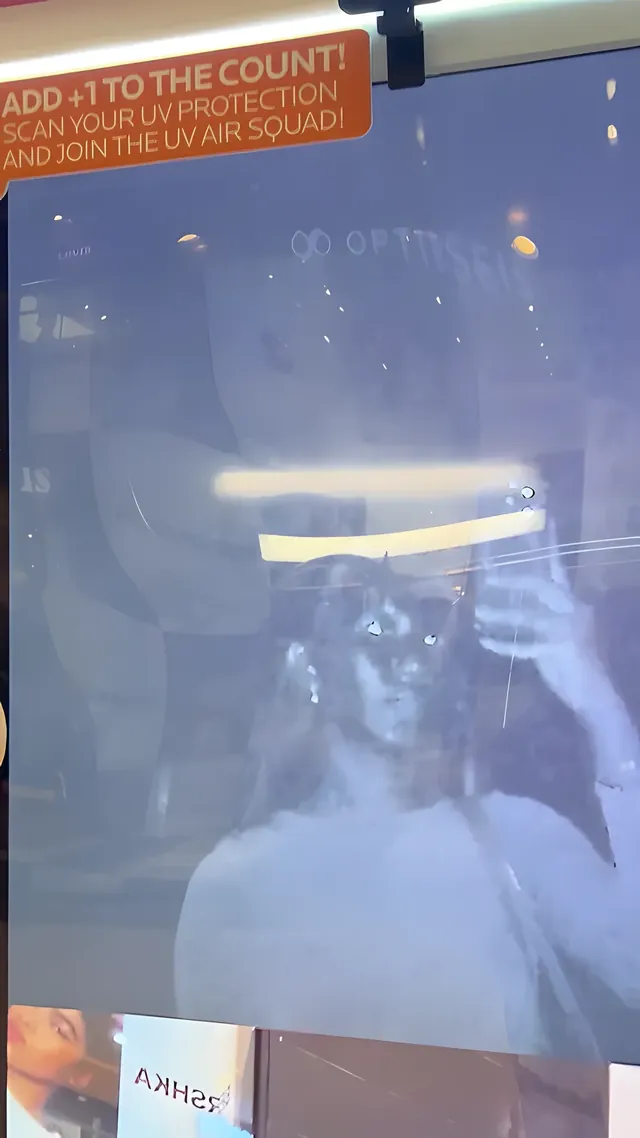
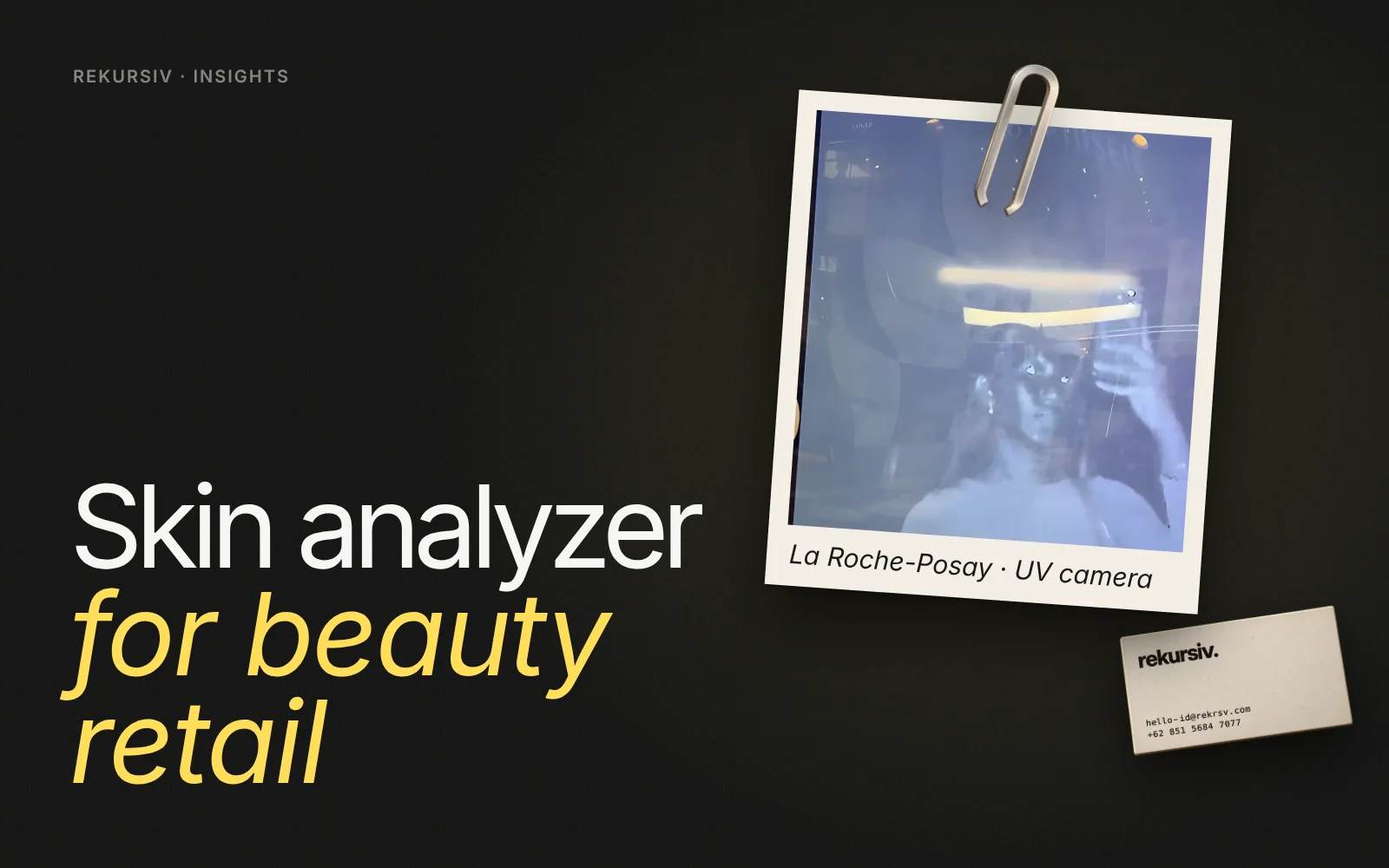
For La Roche-Posay, we built an interactive UV camera with real-time tracking. It senses presence and movement, triggers responsive content, and guides people into a personal UV analysis. The numbers: 103k+ passersby, 5k visitors and 589 analyses. That funnel tells the brand how many people noticed the station, how many engaged, and how many completed a full analysis.
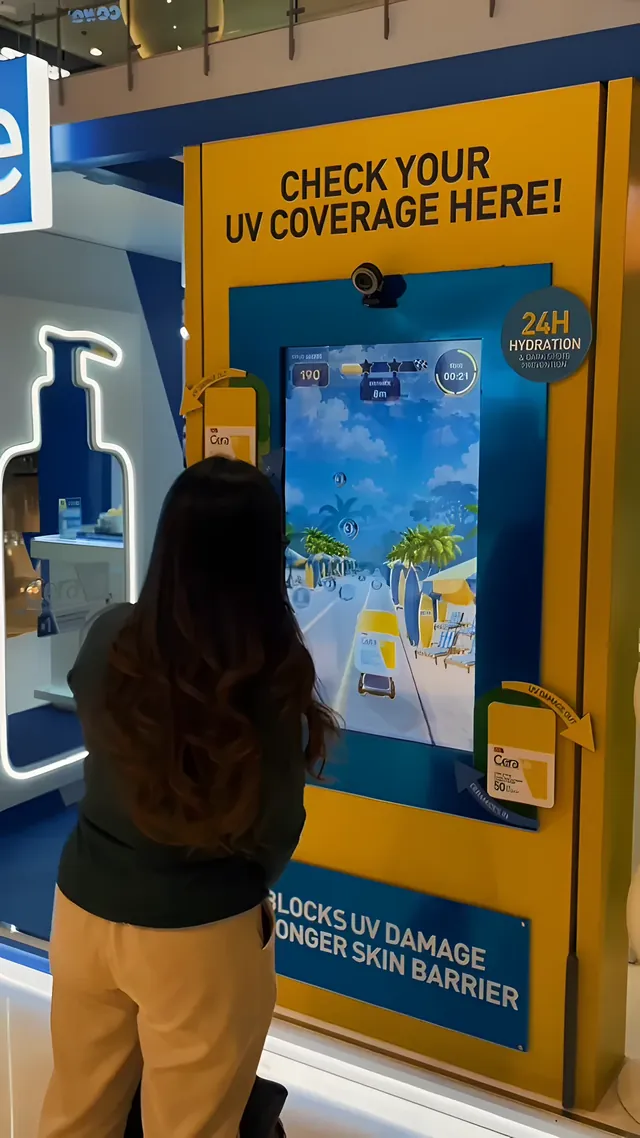
For CeraVe, we made UV protection approachable with two pieces: a UV game visitors steer with their body by moving left and right in front of the camera, and a UV camera mirror that shows how well their sunscreen actually covers them. The game pulls people in, and the mirror makes the product message personal.
Store, Counter or Event?
- Beauty counter or pharmacy: a compact screen and camera, with a beauty advisor next to it. Short sessions and a direct path to the shelf.
- Mall activation: a bigger, more visual station that attracts passersby, with a game or motion element to build a crowd.
- Skincare event: several stations, a queue plan, and results people can share.
Personal Data and Consent
A skin analyzer processes face images, which is personal data under Indonesia's UU PDP No. 27/2022. Ask for consent before the scan, say what the images are used for, keep only what you need, and agree with the brand how long results are stored. Many brands choose to delete face images after the session and keep only anonymous counts.
How to Start
Begin with the result you want shoppers to remember, for example "my sunscreen missed a spot," and work back to the camera, the flow and the products. Test the lighting in the real location before launch, because it affects every result. Then pilot at one counter or one event and expand once the funnel numbers make sense.
Planning a skin analyzer for a store or an event? Talk to us.
Frequently Asked Questions
What is a skin analyzer for beauty retail?
A camera-based station in a store, counter or event booth that analyses a visitor's skin, for example UV exposure, sunscreen coverage or visible skin concerns, and turns the result into product education and recommendations.
Is an AI skin analyzer a medical device?
No. In retail it is a product education and recommendation tool. It shows visible signs and guides people to products, and it should never be presented as a diagnosis.
What can a skin analyzer measure?
Depending on the camera and model: UV exposure on the face, how evenly sunscreen covers the skin, and visible concerns that a brand maps to its range. The brand decides which results lead to which products.
Where does a skin analyzer work best?
Beauty counters, pharmacies, mall activations and skincare events, anywhere a shopper has a minute to stop and wants advice before choosing a product.
Does a skin analyzer collect personal data?
Usually yes, because it processes face images. Under Indonesia's UU PDP No. 27/2022 you need clear consent, a stated purpose and a plan for how long images and results are kept.
Sources
Project figures from rekursiv case studies
- Interactive UV camera La Roche-Posay
- UV game & UV coverage mirror CeraVe