Fintech App Onboarding UX: Designing e-KYC Sign-Ups People Finish
Fintech app onboarding UX explained: the e-KYC steps, where users drop off, and how to design sign-ups that new customers in Indonesia actually finish.
In this article
Fintech app onboarding UX is the design of everything a new customer does between installing the app and their first transaction: creating an account, verifying their identity with e-KYC, securing the account and adding funds. It matters because this is where most fintech apps lose the people they paid to acquire. Good onboarding keeps every required check, but makes each step clear enough that people finish it in one go.
See our fintech app development service.
What Fintech Onboarding Includes
Whether the product is a payment wallet, an investment app, lending or insurance, onboarding usually follows the same backbone:
| Step | What the user does | What good looks like |
|---|---|---|
| Account creation | Phone number or email, OTP | One field per screen, OTP auto-filled where possible |
| Identity (e-KYC) | Photo of ID card (KTP), personal data | Live guidance for the photo, data pre-filled from the card |
| Selfie or liveness | Face photo or short video | Clear instructions, instant feedback if lighting is poor |
| Profile and suitability | Income, occupation, risk profile | Plain language, only questions the product needs |
| Security | PIN, biometrics | Explain why, keep it short |
| Approval and first use | Wait, then fund or transact | Honest time estimate, a useful screen while waiting |
Where People Drop Off
The number of steps matters less than how each step feels. The usual friction points:
- The ID card photo. Glare, blur and cropped edges lead to rejections, often discovered only hours later.
- The selfie or liveness check. People do not know what the app expects, so they retry or give up.
- Long forms with jargon. Investment and insurance terms stop beginners who do not know what to answer.
- Silent waiting. "Your application is being processed" with no time estimate makes people forget the app.
- Asking without explaining. Requests for camera access or a tax number without a reason feel risky.
Design Principles for e-KYC Sign-Ups
- Explain, then ask. One line on why a document is needed, before the camera opens.
- Guide the capture live. A frame for the card, automatic capture when it is sharp, and an immediate retake prompt if it is not.
- Pre-fill, do not retype. Read the data from the ID card and let people confirm or correct it.
- Show progress. "Step 3 of 5" reduces drop-off more than shortening the form by one field.
- Separate "browse" from "transact". Let people explore the app while approval runs, so the wait does not feel empty.
- Write for beginners. Short explanations next to terms like risk profile, without slowing down experienced users.
- Treat identity data carefully. ID card photos and face data are personal data under UU PDP No. 27/2022. Collect only what is needed and say how it is protected.
What Our Fintech Projects Showed
Bahana Sekuritas: A Faster Registration
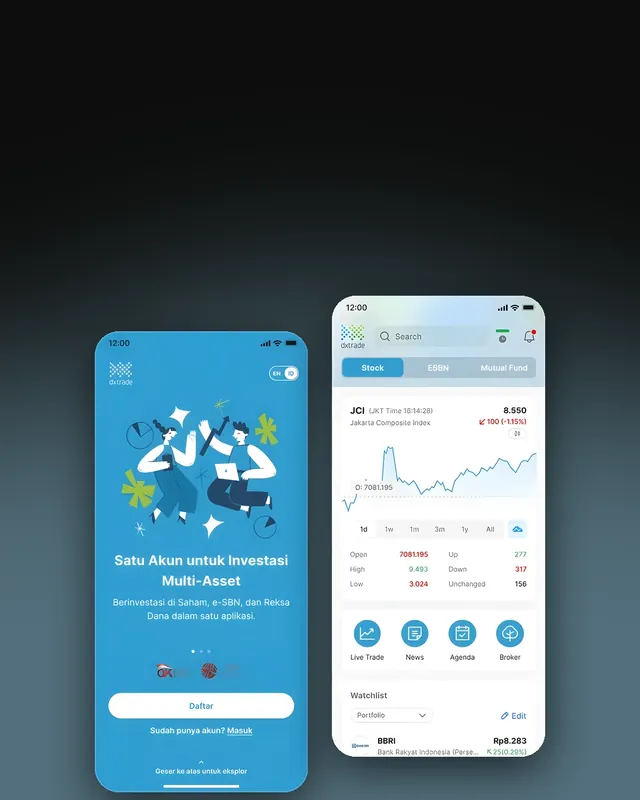
Bahana's trading platform, DXTrade, had not had a major update in years while competitors improved their experience, and engagement was slipping among younger investors. We started with user research, then redesigned the experience and UI as a modern multi-asset investment app. Registration became 62% faster, product finding 92% faster, and time to purchase dropped to under 18 seconds, with 8+ new features.
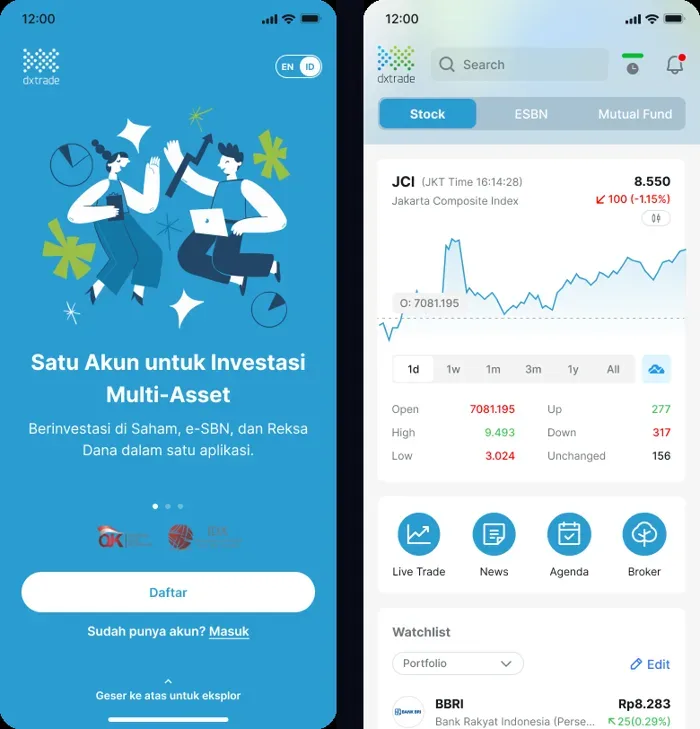 Bahana SekuritasSee the project →
One by IFG: Validated with Users Before Launch
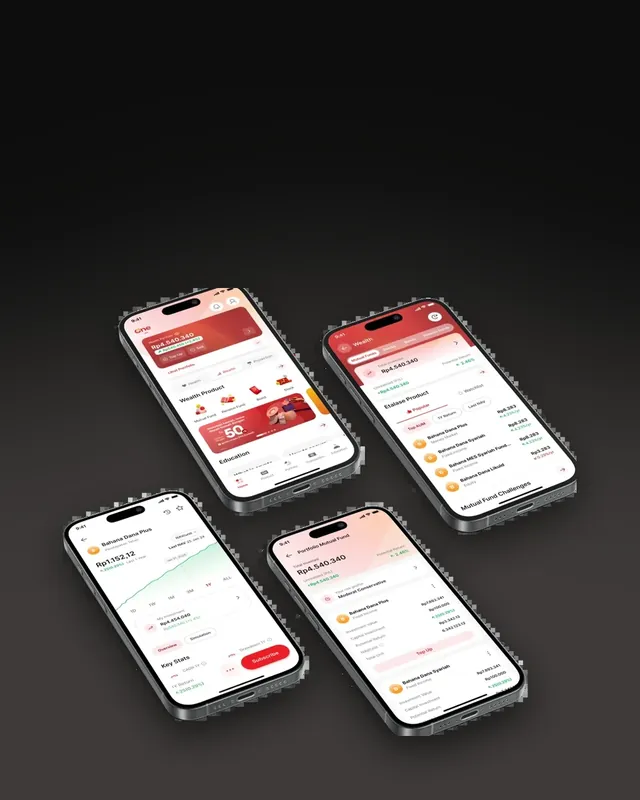
One by IFG combines insurance, mutual funds, bonds and stocks in a single app, and one of its goals was to make investing approachable for beginners. We ran in-depth interviews and usability testing with 15 users before launch. The app reached 75K users in 8 months and a 4.9 app rating.
Mirae Asset Sekuritas: Proof Before Launch
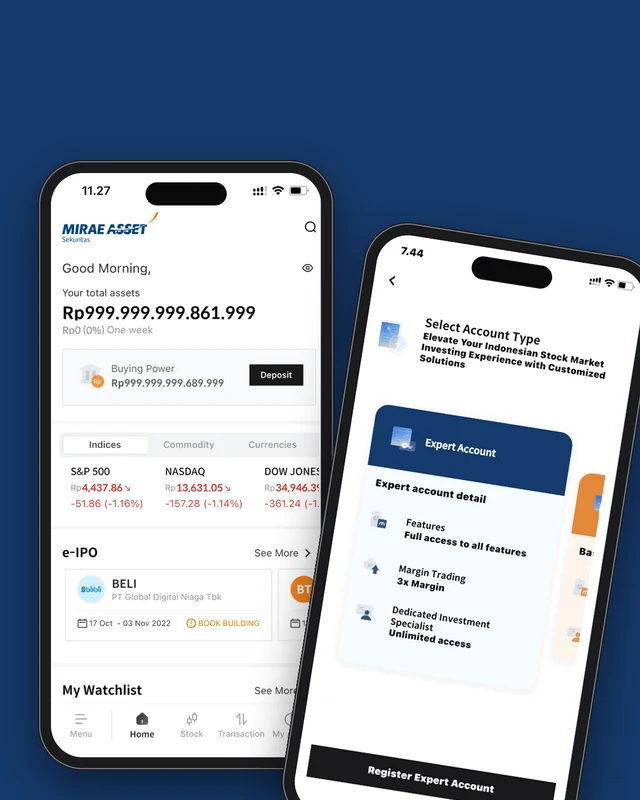
Before launching M-Stock, Mirae wanted proof the customer journey worked. Usability testing with 30 traders, investors and beginners shaped a UI improvement strategy; the app holds a 4.7 rating and 89% of the strategy was implemented.
How to Measure Onboarding
- Completion rate per step, so you know exactly where people stop.
- Time to complete registration, from first screen to submitted application.
- Rejection and resubmission rate for ID and selfie captures.
- Time to first transaction, the moment onboarding actually pays off.
Numbers show where people stop; usability testing with five to fifteen real users shows why.
How to Start
- Map your current onboarding flow, screen by screen.
- Pull completion data per step and pick the worst two.
- Test those steps with a mix of beginners and experienced users.
- Redesign, prototype and test again before the developers build it.
Planning a new fintech app or fixing an existing sign-up? Talk to us.
Frequently Asked Questions
What is fintech app onboarding?
Fintech app onboarding is the flow a new customer goes through from installing the app to making their first transaction: creating an account, verifying identity (e-KYC), setting up security and funding the account.
What is e-KYC?
e-KYC (electronic Know Your Customer) is verifying a customer's identity digitally, usually with an ID card (KTP) photo, a selfie or liveness check, and data matching, instead of a branch visit. Regulated financial services in Indonesia must identify their customers.
Where do users drop off in fintech onboarding?
Usually at the ID card photo, the selfie or liveness step, long forms, and the wait for approval. Unclear instructions and no feedback on errors cause more drop-off than the number of steps alone.
How do you measure onboarding UX?
Track completion rate per step, time to complete registration, the share of submissions rejected and resubmitted, and time to first transaction. Usability testing shows why people stop at a given step.
Does onboarding involve personal data rules?
Yes. ID card data, selfies and face data are personal data under Indonesia's Personal Data Protection Law (UU PDP No. 27/2022), so collect only what you need, explain why, and store it securely.
Sources
Project figures from rekursiv case studies
- Revitalizing a stock trading app Bahana Sekuritas
- One by IFG, an all-in-one finance app IFG
- Pre-launch UX research for a trading app Mirae Asset Sekuritas