AI PPE Detection with CCTV: How It Works and What You Need
How AI PPE detection with CCTV checks helmets, vests and gloves in real time, what cameras and setup you need, and how to run a pilot on site.
In this article
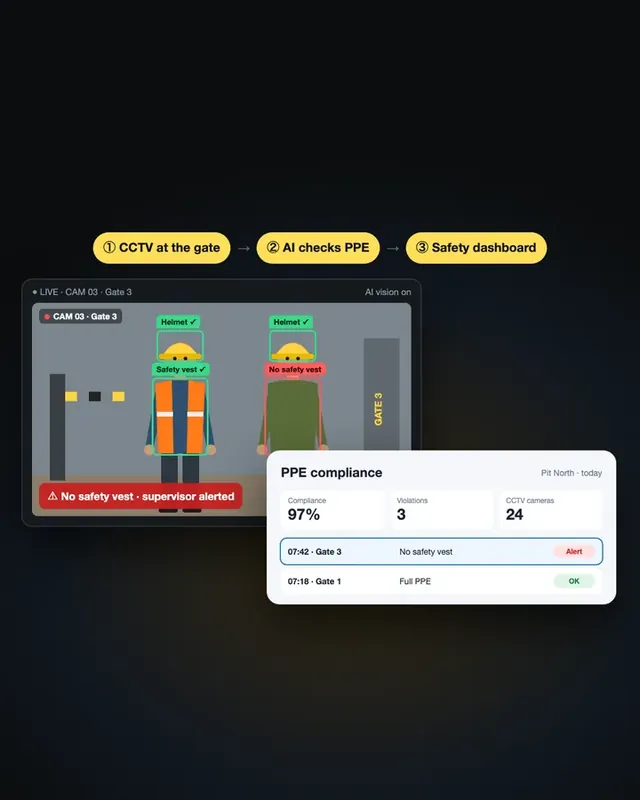
AI PPE detection with CCTV uses computer vision to watch camera footage and check, in real time, whether workers wear the protective equipment their zone requires: helmets, high-visibility vests, gloves and more. When something is missing, the system sends an alert to the safety team before the person steps into danger.
See our AI PPE detection service.
Why Manual PPE Checks Fall Short
Safety officers cannot stand at every gate for every shift. Manual checks depend on who is on duty, happen at a few points, and leave little record of what was missed. CCTV is usually already installed, but recordings are watched after an incident, not before one. AI turns those cameras into a live check.
How AI PPE Detection Works
- Camera feed. The system reads the live stream from a CCTV or IP camera pointed at an entry point or work area.
- Person detection. Computer vision finds each person in the frame.
- PPE check. For every person, the model checks the required items for that zone, for example a helmet, a vest and gloves.
- Alert. If an item is missing, the system notifies the safety officer, a speaker or a screen at the gate, or blocks access where it is connected to a barrier.
- Record. Each event is saved with time, place and a snapshot, so the team can see patterns per zone, shift or contractor.
What You Need on Site
| Element | What to check |
|---|---|
| Camera position | Faces the point where people enter, at a height and angle that shows head, torso and hands |
| Image quality | Enough resolution and light for the items you need to detect, day and night |
| Zone rules | Which PPE is mandatory in which zone, agreed with the HSE team |
| Processing | On-site edge device for fast alerts and limited bandwidth, or a server for many cameras |
| Alert channel | Who receives the alert, how fast, and what they do next |
| Data policy | Retention period, access rights and worker notice |
Where It Fits Best
- Gates to danger zones in mining, oil and gas, construction and heavy industry.
- Warehouses and plants where forklifts and machinery share space with people.
- Contractor entry points, where people change often and rules need to be checked every time.
What We Built for Real Sites
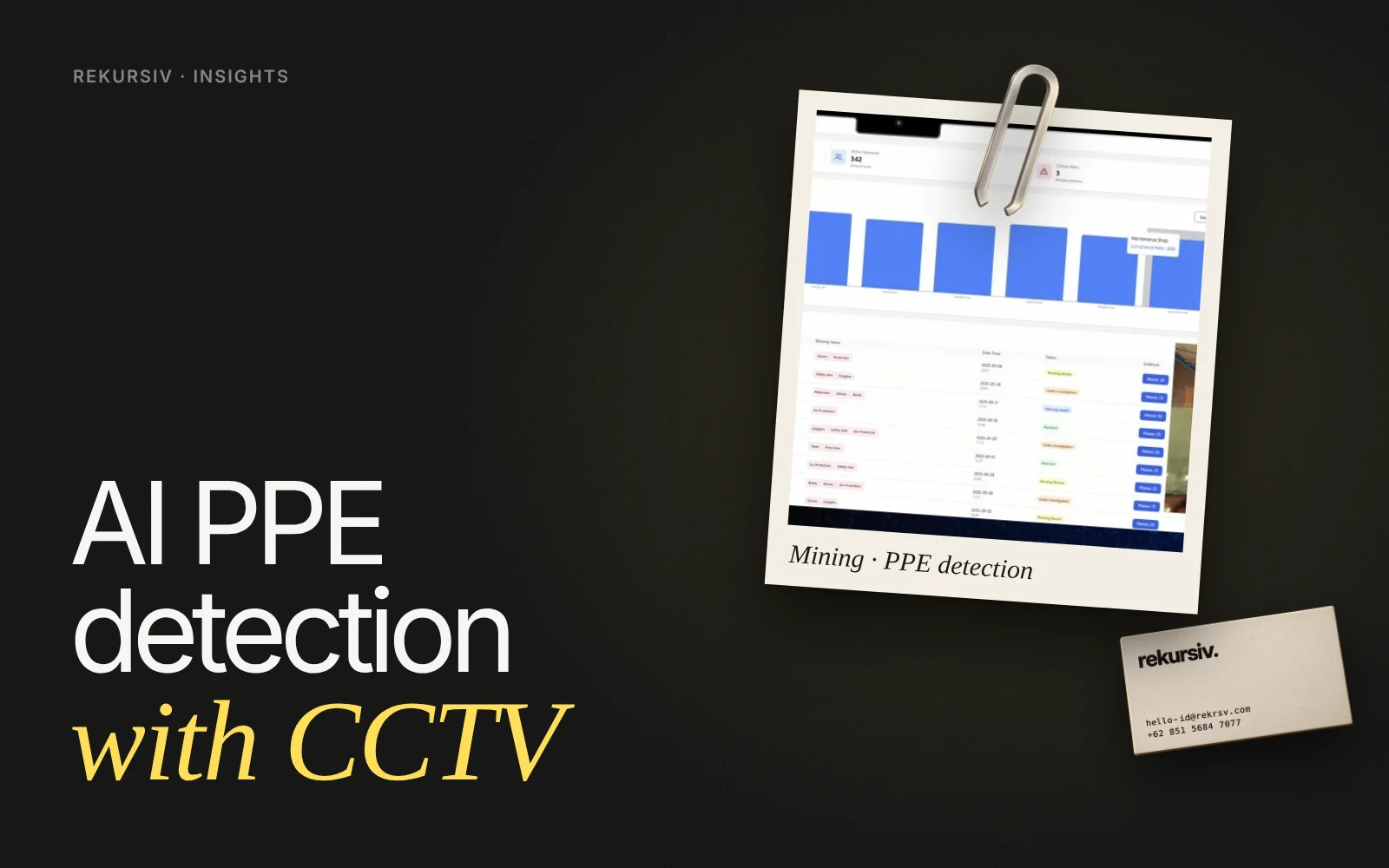
In a mine, one missing helmet or vest can cost a life. For a mining client, we built a computer vision system that checks in real time that helmets, vests and gloves are worn properly before anyone steps into a danger zone.
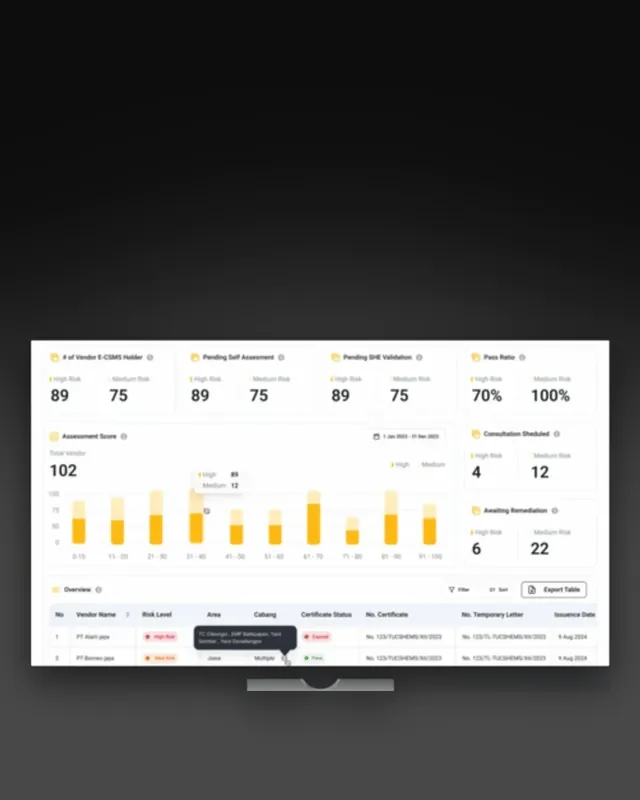
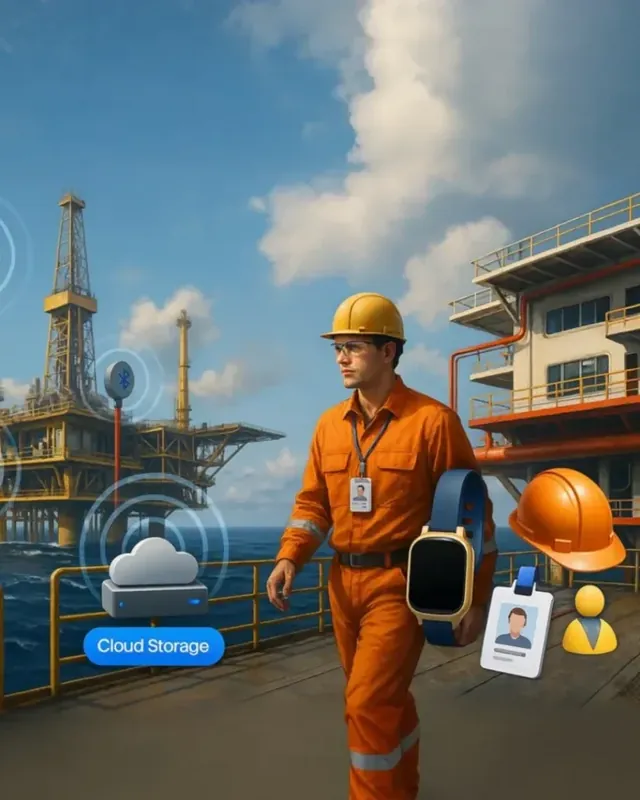
PPE detection is strongest when it feeds a wider safety system. For Trakindo, we built the e-CSMS dashboard, which moved contractor safety checks from manual forms and email threads to real-time compliance tracking and a clear overview for senior management. For offshore operations, we built a BLE-powered, ATEX-certified system for real-time personnel tracking and smart access control. Read more about how these pieces fit together in our guide to digital worker safety systems.
Privacy and Worker Trust
CCTV images of workers are personal data under UU PDP No. 27/2022. Tell workers what the cameras check and why, limit who can see snapshots, keep footage only as long as needed, and use the data for safety, not for unrelated monitoring. Clear rules make the system easier for crews to accept.
How to Start
- Pick one high-risk zone and the cameras already pointed at it.
- Agree the mandatory PPE for that zone with the HSE team.
- Run a pilot and compare the alerts with what supervisors see on site.
- Tune camera positions and alert rules, then add zones and connect the results to your safety dashboard.
Want to test it on one gate first? Talk to us.
Frequently Asked Questions
What is AI PPE detection with CCTV?
A computer vision system that watches CCTV footage and checks whether workers wear the required personal protective equipment, such as helmets, safety vests and gloves. When something is missing, it sends an alert in real time.
Can it use our existing CCTV cameras?
Often, yes. What matters is that the camera sees workers clearly from a suitable angle and distance, with enough light. A short site survey shows which cameras can be used and where a new one is needed.
Which PPE can AI detect?
Common items are safety helmets, high-visibility vests, gloves, masks, safety glasses and boots. Each site chooses the items that are mandatory for each zone.
Does AI PPE detection replace safety officers?
No. It gives safety officers eyes on every camera at once, so they can act on real alerts instead of watching screens all day. Decisions and follow-up stay with people.
Is CCTV footage of workers personal data?
Yes. Images of people are personal data under UU PDP No. 27/2022, so the system needs a clear purpose, worker notice, access control and a retention policy.
Sources
Project figures from rekursiv case studies
- AI safety gear (PPE) detection Mining
- e-CSMS safety & compliance dashboard Trakindo
- Offshore safety with BLE Offshore operations