UI/UX Design Cost: What Sets the Price and How to Scope It
What drives UI/UX design cost in Indonesia: scope, research, number of flows, prototyping and testing, pricing models and how to scope a project that fits.
In this article
UI/UX design cost depends on scope, not on a fixed price per screen. What you pay follows how many user flows and user types the product has, how much research and usability testing is included, and what you receive at the end. This guide breaks down those factors so you can compare proposals fairly and scope a project that fits your budget.
See our UI/UX design service.
What You Pay For in UI/UX Design
A UI/UX project is more than drawing screens. Most of the value sits in the work before and around them:
- Research: interviews and analytics that show how people actually use the product.
- Flows and structure: user journeys, information architecture and wireframes.
- UI design: the visual layer, every screen with its empty, loading, error and success states.
- Prototype: a clickable version people can try before anything is built.
- Usability testing: watching real users complete key tasks and fixing what trips them up.
- Handover: Figma files, a design system and documentation for developers.
When a quote looks low, check which of these it leaves out.
The Factors That Set the Price
| Factor | Why it changes the cost |
|---|---|
| Number of flows | Sign-up, checkout and account settings are each separate work, with their own states and edge cases |
| User types | A customer app plus an admin dashboard is two products, not one |
| Platforms | iOS, Android, web and tablet each need layouts checked and adapted |
| Research depth | A few interviews versus a multi-city study with recruitment |
| Testing rounds | One round on the main flow, or testing after every major iteration |
| Design system | Reusable components take time up front and save time on every new screen |
| Industry rules | Finance, health and public services add compliance and accessibility checks |
| Timeline | A compressed deadline needs a bigger team working in parallel |
Common Pricing Models
- Fixed project. A defined scope, deliverables and timeline for one price. Best when the flows are clear.
- Team time. You book designers and researchers for a set number of weeks. Best when the scope will change as you learn.
- Monthly retainer. An ongoing design partner for a live product with a steady stream of new features.
- Per screen. Common for small visual jobs. It rarely covers research, flows or testing, so use it carefully for a full product.
What Good Research Is Worth: Two Examples
Research and testing are the parts teams most often cut to lower the budget. Our case studies show why they pay off.
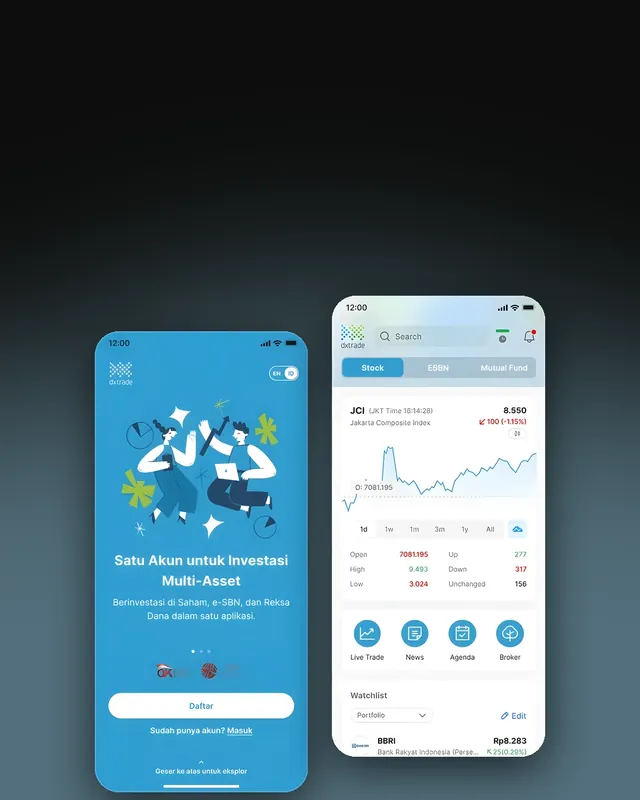
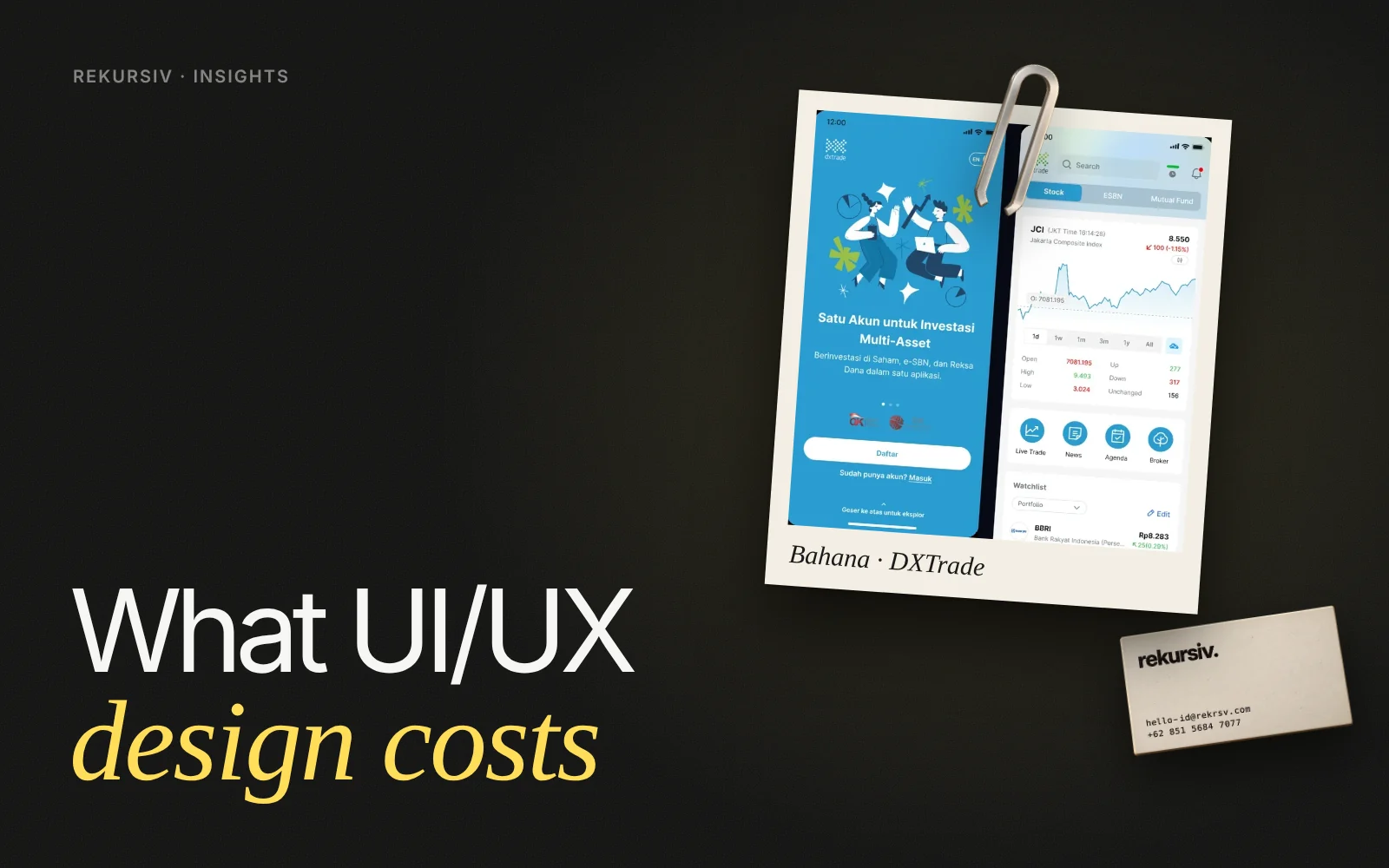
Bahana Sekuritas. The DXTrade trading app hadn't had a major update in years. We ran user research, then redesigned the experience and UI. The result: registration became 62% faster, finding a product 92% faster, time to purchase dropped to under 18 seconds, and the app gained 8+ new features.
 IFGSee the project →
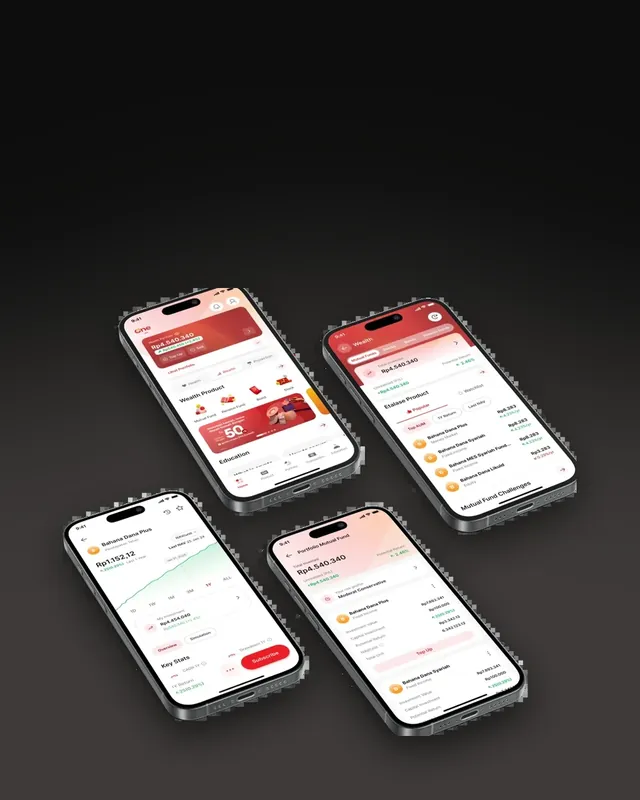
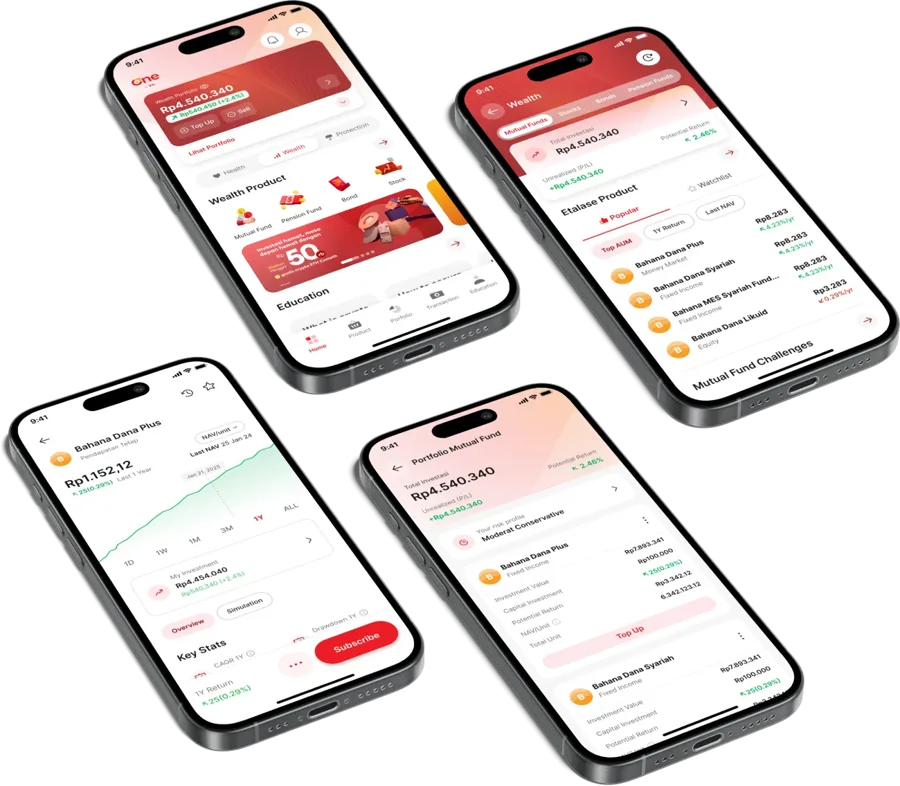
One by IFG. An all-in-one finance app for insurance, mutual funds, bonds and stocks. Before launch we ran in-depth interviews and usability testing with 15 users, then shaped the UX strategy and design. The app reached 75K users in 8 months with a 4.9 rating.
In both cases, problems were found in the design stage, when fixing them meant changing a prototype instead of rewriting code.
How to Keep the Cost Under Control
- Write a one-page brief: the goal, the users, the main flows, and what success looks like.
- Start with one key flow: design, prototype and test it end to end before scaling.
- Test early and lean: five to eight people per user group in one round often reveal the biggest problems.
- Reuse a design system: new screens get faster once components exist.
- Ask for a fixed proposal with deliverables listed, so you know exactly what is and isn't included.
- Own your files: make sure the Figma files, design system and research findings are handed over to you.
How to Start
Pick the flow that matters most to your business, such as sign-up, onboarding or checkout, and send us a short brief. rekursiv has worked on apps, websites and dashboards since 2021, with research, design and development in one team, so what we test is what gets built. We will reply with a scoped, fixed proposal.
Ready to scope your project? Contact us.
Frequently Asked Questions
What is UI/UX design cost?
UI/UX design cost is what you pay a designer or agency to research, design, prototype and test the user flows and screens of an app, website or dashboard. In Indonesia it depends on the number of flows and user types, how much research and testing is included, and what you receive at handover.
How is UI/UX design priced?
Usually per project with a fixed scope, by team time for a set period, or as a monthly retainer for ongoing product work. Pricing per screen is common for small jobs, but it hides the work that matters most: research, flows and testing.
Why do UI/UX quotes differ so much?
Because they cover different work. One quote may be visual design only, another includes interviews, a clickable prototype, usability testing and a design system. Compare what each proposal delivers, not only the total.
Can I skip research to lower the cost?
You can start lean, for example with a few interviews and one round of testing on the main flow. Skipping it completely usually moves the cost to development, when changes are slower and more expensive.
What should be included in a UI/UX design project?
At minimum: the agreed flows designed in Figma with all states, a clickable prototype, findings from testing with real users, and the components and documentation your developers need.
Sources
Project figures from rekursiv case studies
- Revitalizing a stock trading app Bahana Sekuritas
- One by IFG, an all-in-one finance app IFG