Company Profile Website: What to Include and How to Build One That Works
What a company profile website is, the pages it needs, how to structure it for buyers in Indonesia, and the numbers that show it works.
In this article
A company profile website is your business's official home online: it explains who you are, what you offer, what you have delivered before and how to get in touch. For most buyers in Indonesia, it is the page they check before they send a WhatsApp or an email, so its job is to answer those questions quickly and lead to one clear next step.
See our website design and development service.
What Is a Company Profile Website?
A company profile website is the digital version of your company profile, built to be found and used. Unlike a PDF sent to one person, it shows up on Google, can be updated any time, and can be measured. Buyers use it to check credibility, partners use it to understand your scope, and candidates use it to decide whether to apply.
The Pages Most Company Profile Websites Need
| Page | What it answers | Next step to offer |
|---|---|---|
| Home | Who you are and what you do, in one sentence | Go to a service or contact |
| Services or products | What exactly you offer, one page each | Ask for a quote or demo |
| Case studies or portfolio | Proof you have done this before | See a similar project |
| About | History, team, values, certifications | Meet the team or apply |
| Contact | How to reach you and where you are | Form, WhatsApp, map |
Larger companies often add careers, news, sustainability or investor pages. Add them when someone will keep them updated.
How to Structure It so People Find Things
- Start from the questions visitors ask. List the top five reasons people visit and make sure each one is answered within two clicks.
- Give every service its own page. One long page with everything on it is hard to read and hard for Google to rank.
- Write for the least technical visitor. Short sentences, familiar words, and no internal jargon.
- Put one call to action on every page. A visitor who is ready should never have to hunt for the contact button.
- Make it easy for your team to update. A content system your marketing team can use keeps the site from going stale.
- Test it with real users before launch. Watching five people try to find a service shows problems no internal review will catch.
What This Looks Like in Real Projects
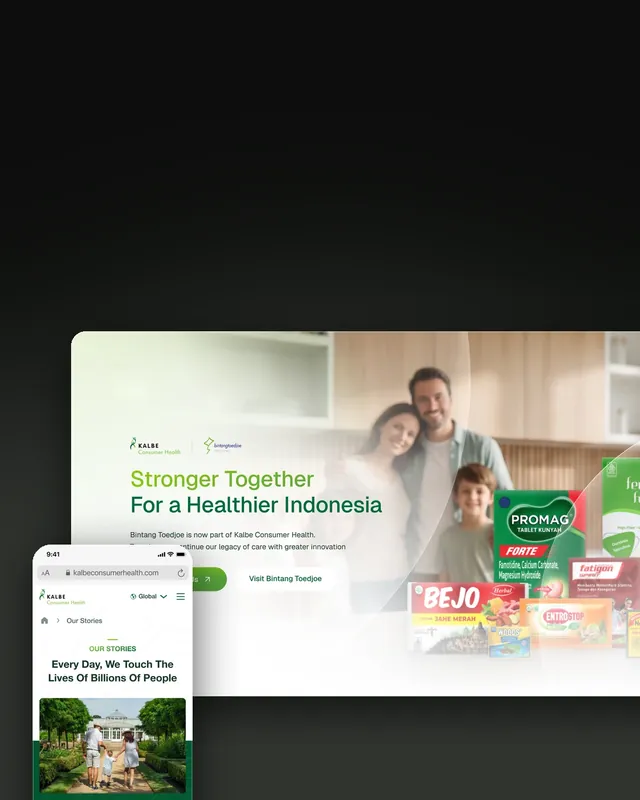
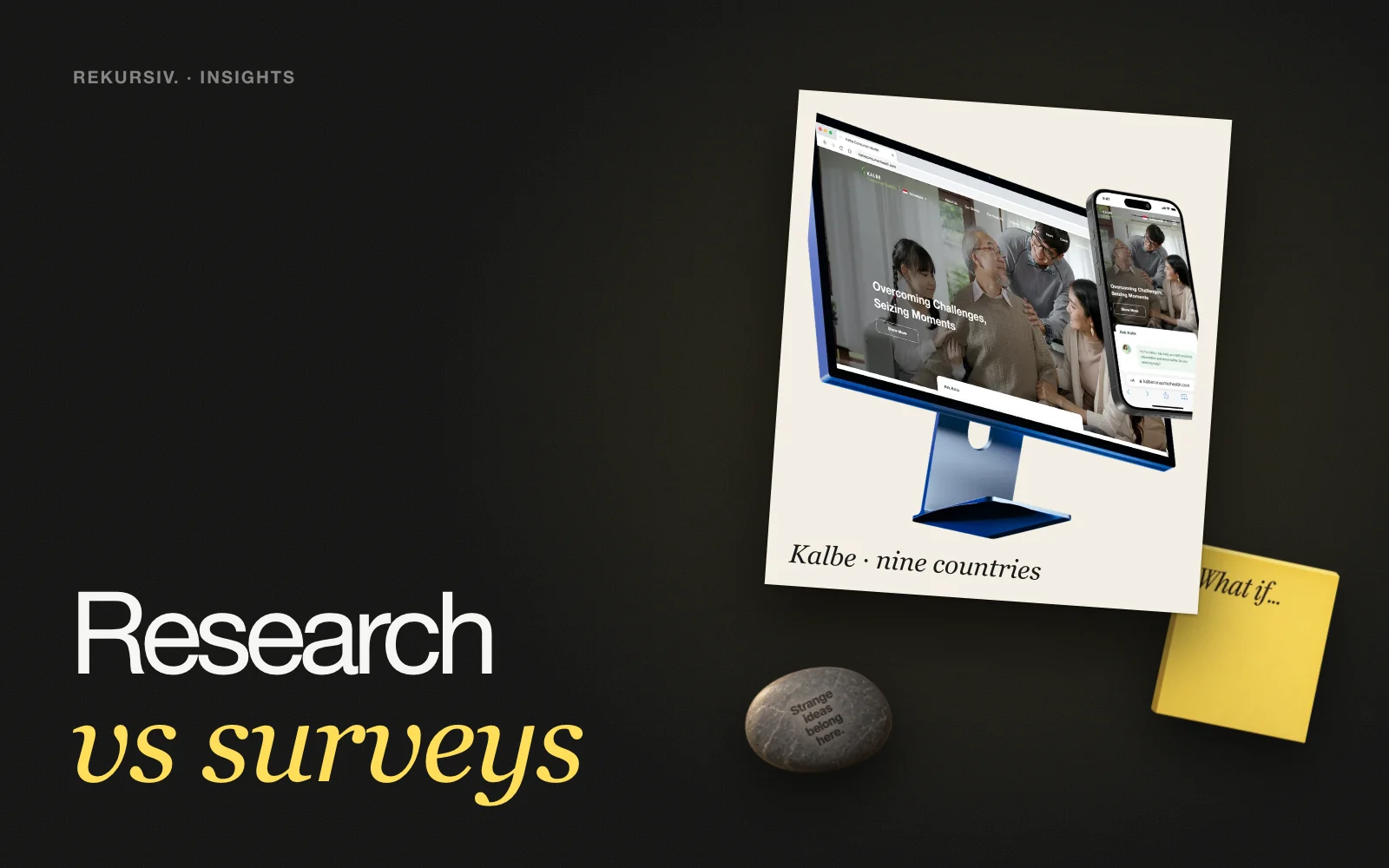
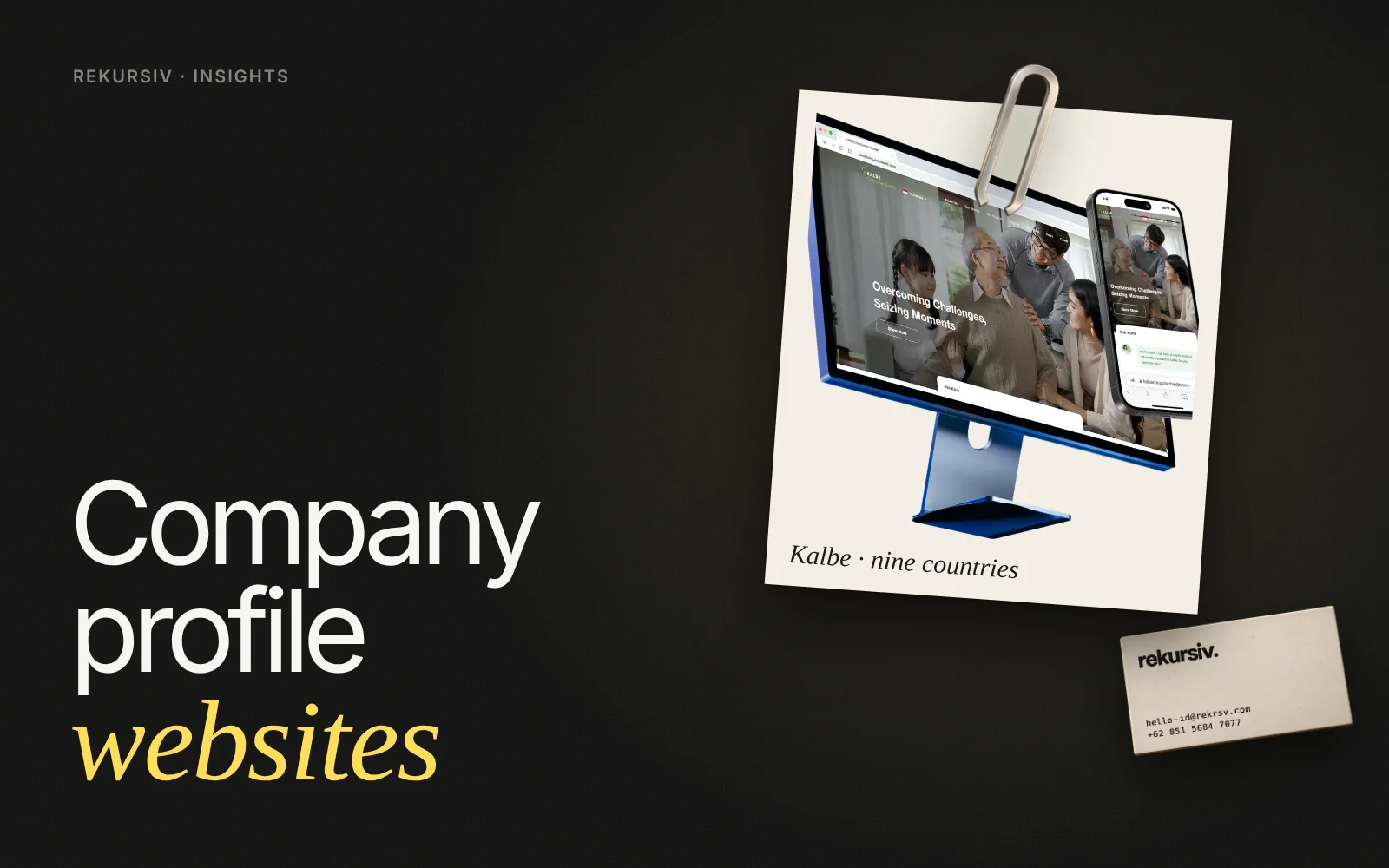
One site for nine countries. Kalbe Consumer Health needed a global website that feels local in each market, works for people with low digital literacy and is easy for every country team to manage. After user research, journey analysis, wireframing and usability testing, the site launched in 9 countries, cut average search time by 66%, reached a 4.3% conversion to purchase and an average session of 2m 03s.
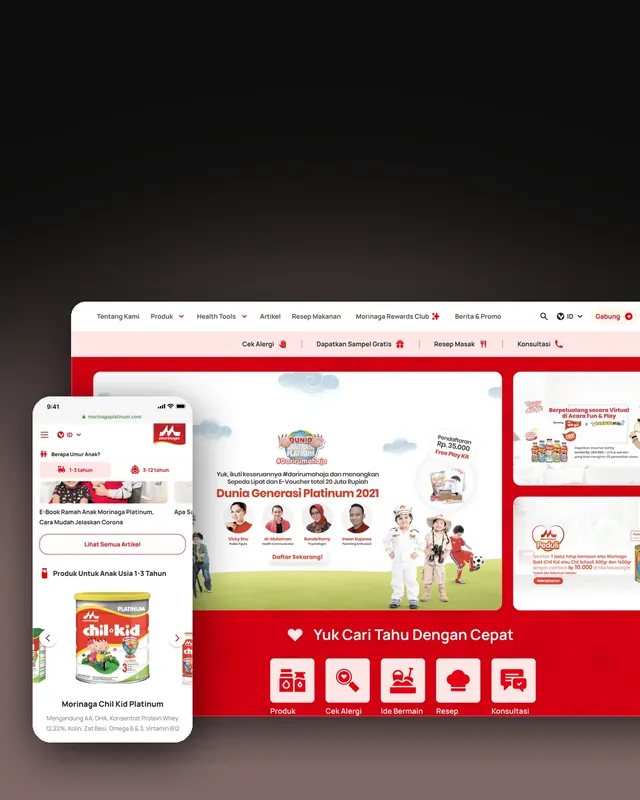
Fixing a site that lost its visitors. Morinaga Soya's website traffic had dropped sharply over 90 days, with high bounce rates. Usability testing, competitive analysis and a new information architecture raised session duration to 2m 28s (+24%) and pages per session to 2.0 (+22%), with bounce rate down 3%.
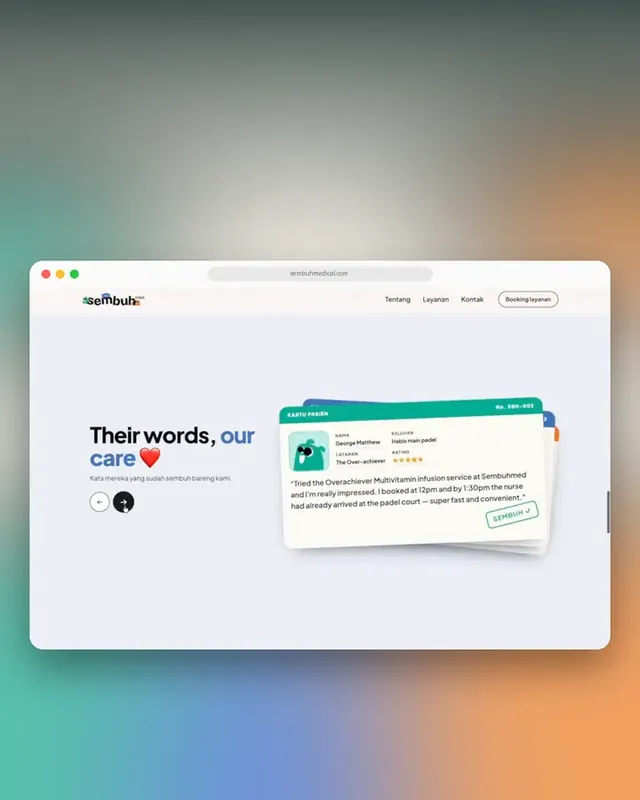
Making every service bookable. Sembuh, a home-care provider, had a website with a confusing flow, no detail on each service and calls to action that did not guide people to book. We redesigned and rebuilt it so every service has its own detail and a clear path to booking.
What to Measure After Launch
- Search time: how quickly visitors find the service or information they came for.
- Session duration and pages per session: whether people read beyond the home page.
- Bounce rate: how many leave without doing anything.
- Enquiries: form submissions, WhatsApp clicks and calls, the numbers that matter most.
Small Business or Corporate?
A small business usually needs a few clear pages, a WhatsApp button and good local search basics. Our UMKM website package starts at Rp10 million and is ready in 7 days. A corporate or multi-country site needs more planning: research with real users, a content system per team, multiple languages and testing before launch.
How to Start
- Write down who visits your site and what they need to find.
- Collect your best proof: projects, clients, certifications, numbers.
- Decide which pages you need now and which can wait.
- Agree how you will measure success, then design and test.
Ready to build or rebuild your company profile website? Talk to us.
Frequently Asked Questions
What is a company profile website?
A company profile website is a business's official site that explains who the company is, what it offers, what it has done before and how to contact it. It is often the first place a buyer, partner or job candidate checks before getting in touch.
What pages should a company profile website have?
At minimum a home page, a page per service or product line, case studies or a portfolio, an about page with the team and history, and a contact page. Larger companies add careers, news and investor or sustainability pages.
How is a company profile website different from a PDF company profile?
A PDF is a static document sent to one person. A website can be found on Google, updated at any time, measured with analytics and can turn a visitor into an enquiry with a form or WhatsApp button.
How long does it take to build a company profile website?
It depends on the number of pages, languages and integrations. A simple small business site can be ready in about a week, while a multi-country corporate site with research and testing takes longer.
How do I know if my company profile website works?
Track how quickly people find what they need, how long they stay, how many pages they view and how many contact you. Usability testing with a few real users shows where they get stuck.
Sources
Project figures from rekursiv case studies
- One website for nine countries Kalbe Consumer Health
- A better website for parents of allergen-sensitive kids Morinaga Soya
- Revamping Sembuh’s home-care website Sembuh