Interactive Museum Exhibits: Ideas, Technology and What to Measure
How interactive museum exhibits work: AR hunts, motion games and feedback screens, the technology behind them, and the numbers worth tracking per visit.
In this article
Interactive museum exhibits turn a visit from looking into doing. Visitors hunt for objects with their phone, steer a game with their hands or answer a question on a screen, and the exhibit responds. The result is a longer visit, a story people retell, and data the organiser can actually use.
See our interactive booth service.
What Makes a Museum Exhibit Interactive
A display becomes interactive when the visitor's action changes what happens next. That can be small: tapping a favourite spot on a screen. Or it can shape the whole visit: a hunt that takes people through every room.
Good interactive exhibitions share three traits:
- One mechanic, understood in seconds. Scan, tilt, tap. No long instructions.
- A reason to finish. A reward, a personal result or simply a game worth completing.
- Something left behind. A session time, a score or an answer that tells the team what worked.
Types of Interactive Exhibits
| Type | How it works | Best for |
|---|---|---|
| AR hunt on the visitor's phone | Visitors find virtual objects placed around the space | Moving people through a whole exhibition |
| Motion-controlled game | Players tilt or move to control the game | Busy spots where people watch and queue |
| Interactive feedback screen | Visitors pick favourites and describe the visit | Learning what visitors loved |
| Self-service kiosk | Visitors create or claim something on their own | Rewards and take-home results |
Three Projects and Their Numbers
Museum of Toys: An AR Ghost Hunt
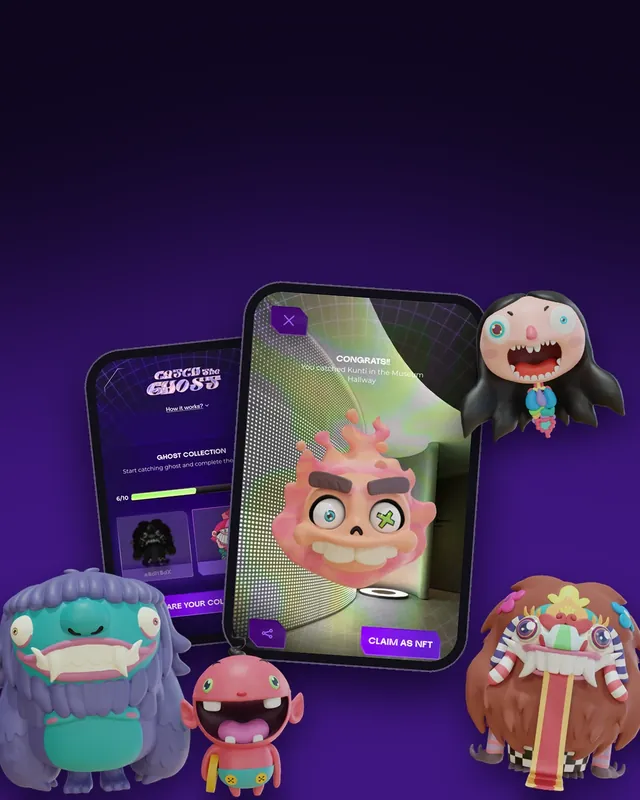
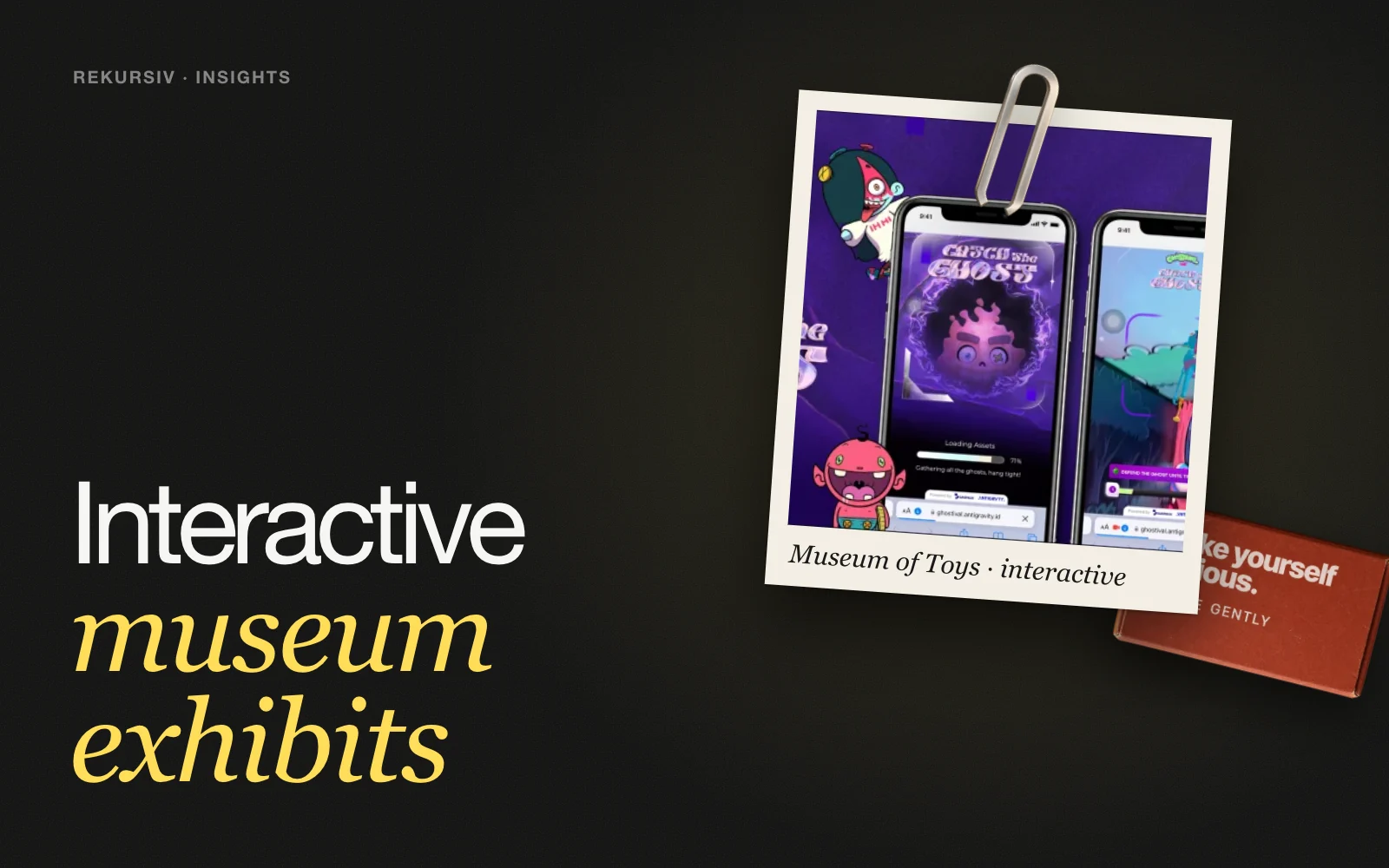
For Museum of Toys and Gaspack, at the Ghostival exhibition, we designed Catch The Ghost. Visitors use their phones to catch 10 virtual ghosts in AR, earn a gift and claim an NFT. The goal was to make exploring the space more interactive and to drive word of mouth and repeat visits.
Our work covered concept ideation, story crafting, wireframing and UX optimisation. The average session duration was 5 minutes 55 seconds, with a 41% bounce rate.
Museum of Toys · GaspackSee the project →Illumazed: A Motion-Controlled Maze
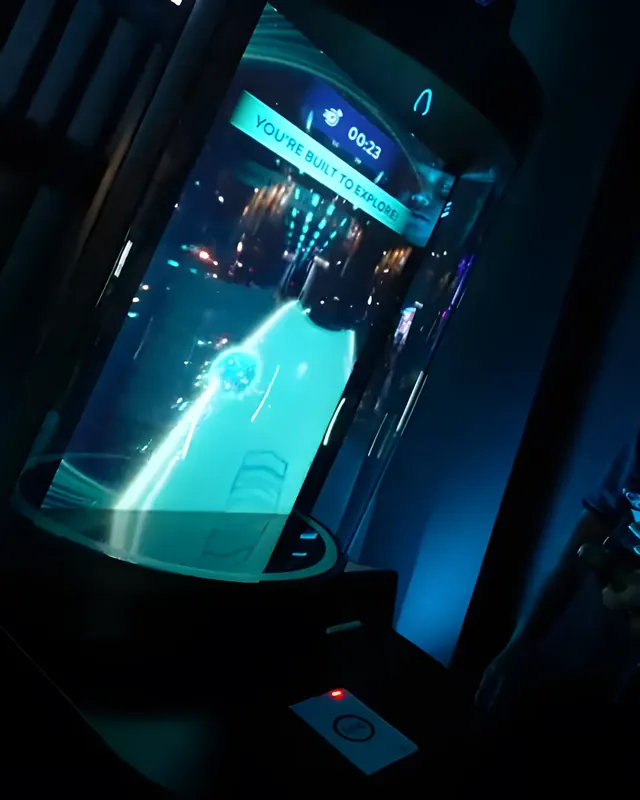
For an FMCG brand, Illumazed is a skill game where players tilt to guide a glowing ball through a maze. A built-in gyroscope and real-time object tracking turn every move into play. It drew 1,205 participants, about 402 per day. The same mechanic works in an exhibition hall: easy to start, fun to watch, and quick enough to keep a queue moving.
FMCGSee the project →Curiosity Screen: Feedback People Enjoy Giving
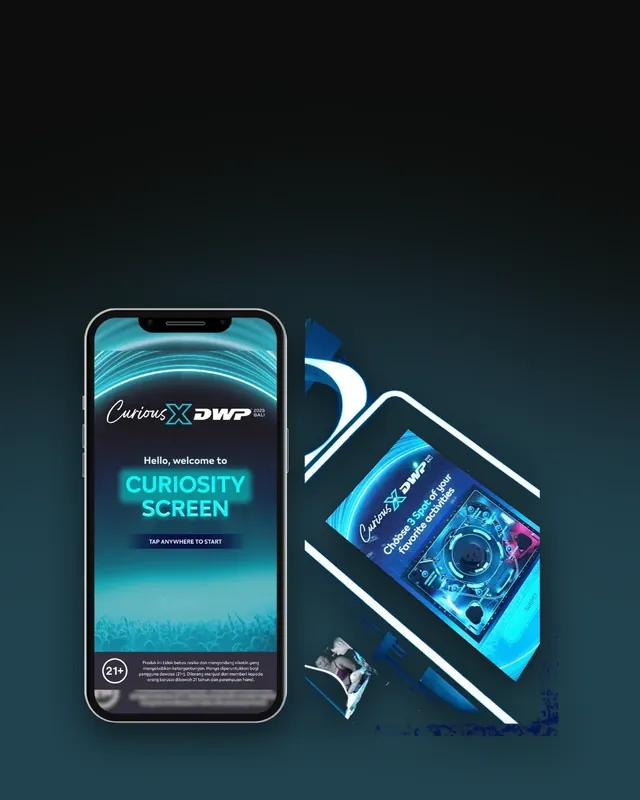
For an FMCG brand experience store, the Curiosity Screen replaced a survey with an interactive screen. Visitors pick their favourite spots and events and describe the experience in three words. Every answer is collected and categorised for the team. For a museum, this is a simple way to learn which rooms and programmes visitors remember.
How to Plan an Interactive Exhibition
- Start with the story. What should visitors remember when they leave? The mechanic should serve that.
- Map the visitor flow. Where do people enter, wait and slow down? Put interaction where attention already is.
- Pick one main mechanic. Phone AR, motion or touch. One clear interaction beats several half-finished ones.
- Design for the queue. Short rounds, a screen others can watch, and staff who can reset quickly.
- Decide the metrics early. Session duration, participants per day, completion and feedback answers.
- Test before opening. Run it with real visitors, watch where they hesitate, then adjust.
What to Measure
Count more than visitors through the door. Track how long people stay with the exhibit, how many finish the mechanic, how many come back and what they say about it. If the exhibit asks for names, phone numbers or emails, for example to send a reward, ask for consent and keep the data in line with UU PDP No. 27/2022.
How to Start
Bring the exhibition theme, the floor plan and the dates. We will suggest one mechanic that fits the story, sketch the visitor flow and agree on the numbers to track before anything is built. Contact us to plan your interactive exhibit.
Frequently Asked Questions
What are interactive museum exhibits?
Exhibits that respond to what visitors do. Instead of reading a panel, people scan, tilt, touch or choose something, and the exhibit reacts with content, a game or a reward.
What technology do interactive exhibitions use?
Common options are AR on the visitor's own phone, motion and gyroscope controls, real-time object tracking, and touch screens. The right choice depends on the story, the space and how many people pass through.
How do you measure an interactive exhibit?
Track session duration, participants per day, completion of the mechanic and the feedback visitors give. In our AR exhibition hunt the average session lasted 5 minutes 55 seconds.
Do interactive exhibits need visitors to download an app?
Not always. Web-based AR and on-site screens let people take part without installing anything, which keeps the start quick.
What about visitor data?
If an exhibit collects names, contacts or other personal data, ask for consent and handle it in line with Indonesia's personal data protection law, UU PDP No. 27/2022.
Sources
Project figures from rekursiv case studies
- Catch The Ghost: an AR hunt for an exhibition Museum of Toys · Gaspack
- Illumazed: a motion-controlled maze FMCG
- Curiosity Screen: feedback people enjoy giving FMCG