Focus Group vs In-Depth Interview: Which One Should You Run?
Focus group vs in-depth interview: how each method works, when to pick which, how many people you need, and how they worked in real studies in Indonesia.
In this article
A focus group (FGD) gathers 6 to 8 people for one guided discussion, while an in-depth interview (IDI) talks to one person at a time. Choose a focus group when you want to hear shared opinions and reactions; choose in-depth interviews when you need personal, detailed or sensitive stories. Many good studies use both.
See our user research service.
What Is a Focus Group Discussion?
A focus group discussion is a moderated conversation with a small group of people who share a profile, for example young parents who pay bills by app. A moderator follows a discussion guide, shows concepts or screens, and lets participants react to each other. The value is in the interaction: one comment triggers another, and you hear the words people naturally use for your product.
What Is an in-Depth Interview?
An in-depth interview is a one-to-one session, usually 45 to 60 minutes, in person or by video call. The researcher follows one person's story in detail: how they decide, what they tried before, where they got stuck and why. Without a group listening, people talk more openly about money, health, routines and the things they would rather not admit in public.
Focus Group vs in-Depth Interview at a Glance
| Focus group | In-depth interview | |
|---|---|---|
| People per session | 6 to 8 | 1 |
| Session length | 90 to 120 minutes | 45 to 60 minutes |
| Best for | Shared language, reactions to concepts, group norms | Personal journeys, decisions, sensitive topics |
| Risk | Loud voices steer the group; people follow the majority | Fewer people per day; more time to analyse |
| Typical sample | 2 to 4 groups per segment | 8 to 15 people per segment |
| Logistics | One room, one time slot for everyone | Flexible, easy across cities |
When to Choose Which
- The topic is personal or sensitive. Choose in-depth interviews. Finance, health and private habits get honest answers one to one.
- You want to compare reactions to concepts or messages. Choose a focus group. Hearing people agree and disagree shows which idea has energy.
- Your audience is spread across cities. Interviews by video call are easier than gathering a group in one room.
- You need to map a full journey. Interviews let you follow one person from first contact to the last step without interruption.
- You are early and the problem is fuzzy. A few focus groups help you find the right questions; interviews then go deeper.
What Both Methods Cannot Do
Neither method shows you whether people can actually use your app or website. What people say in a discussion often differs from what they do on a screen. Pair them with usability testing to watch real behaviour, and with a survey when you need to know how many people share a view.
How It Worked in Real Studies
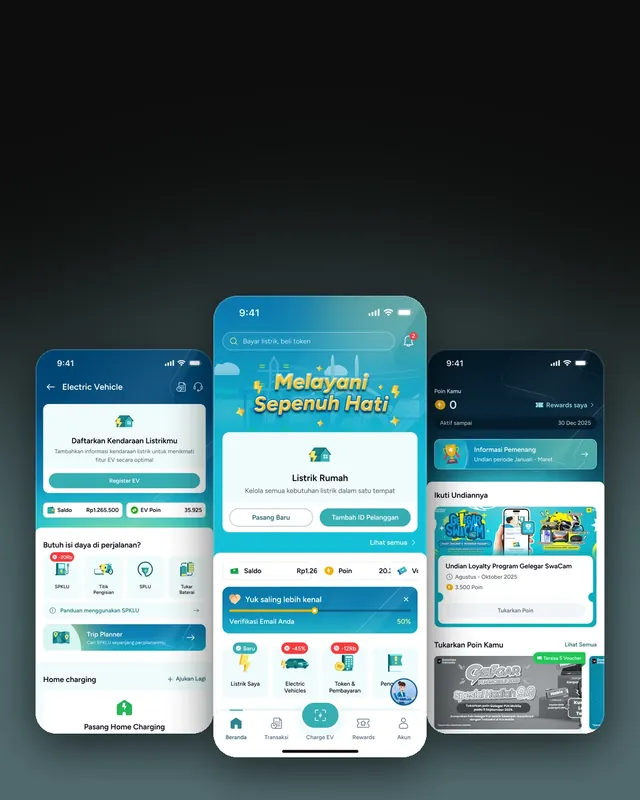
- PLN Mobile. For the revamp of the super app, the research combined user research, focus group discussions and usability testing. Insights from 40+ users of the live app showed it felt outdated, had too many steps and buried important information. The result was tested with 8 personas across Indonesia before the final UI.
- Reaching audiences beyond Jakarta. For a consumer brand under NDA, we ran 30 in-depth interviews across 5 regions, surveyed 288 people and spent days at events in Medan. The finding came from the one-to-one and field work: outside Jakarta, trust comes from a real person, and people share at a booth what they won't share online.
- An immersive brand world. Over two years, a brand under NDA tested its 3D web world in 6 studies with 70+ sessions and interviews, plus a survey of 73 people and field immersion in Makassar. Interviews explained why people explored; concept tests showed which version earned sign-ups.
Running It Well
- Recruit carefully. The right 8 people beat 30 random ones. Screen for the behaviour you want to learn about.
- Use a neutral moderator. Someone outside the product team asks better follow-up questions and does not defend the design.
- Write a guide, not a script. List topics and key questions, then leave room to follow what participants bring up.
- Get consent for recordings. Recordings, faces and voices are personal data under Indonesia's personal data protection law (UU PDP No. 27/2022). Explain how they are stored and who sees them.
- Analyse across sessions. Look for patterns that repeat across people and groups, not one memorable quote.
How to Start
Write down the one decision the research should help you make. That decision tells you which method fits: focus groups for reactions and shared language, in-depth interviews for depth and sensitive topics, usability testing for behaviour. Then plan a small first round, learn, and expand.
Want help choosing and running the right study? Contact us.
Frequently Asked Questions
What is the difference between a focus group and an in-depth interview?
A focus group is a moderated discussion with a small group, usually 6 to 8 people, about one topic. An in-depth interview is a one-to-one conversation, usually 45 to 60 minutes, that goes deeper into one person's habits, motives and decisions.
When should I choose a focus group?
When you want to hear how a group talks about a product, compare reactions to concepts or messages, or explore a topic quickly before you design. It works well for everyday, low-sensitivity subjects.
When is an in-depth interview better?
When the topic is personal or sensitive, such as money, health or habits people keep private, when you need to follow one person's full journey, or when participants are hard to gather in one place, such as busy professionals or people in different cities.
How many participants do I need?
For focus groups, plan 2 to 4 groups of 6 to 8 people per audience segment. For in-depth interviews, 8 to 15 per segment usually shows the main patterns; larger, multi-region studies run more.
Can focus groups replace usability testing?
No. A focus group tells you what people say and feel about a product. A usability test shows whether they can actually use it. Most product studies need both.
Sources
Project figures from rekursiv case studies
- Reaching audiences beyond Jakarta Adult FMCG brand · Under NDA
- Six studies behind an immersive brand world Adult FMCG brand · Under NDA
- Revamping the PLN Mobile super app PLN