Event Game Booth: How Phone-as-Controller and Motion Games Work
How an event game booth works: phone-as-controller and motion games, round length, throughput, live leaderboards and the hardware behind them.
In this article
An event game booth is a short, branded game that visitors play on a big screen at an event, exhibition or mall. The best ones use a controller everyone already has: their own phone, or their body tracked by a sensor. Rounds last seconds, scores appear instantly, and a live leaderboard keeps people around to see where they landed.
See our game development service and interactive booth service.
Two Ways to Control the Game
Phone as the Controller
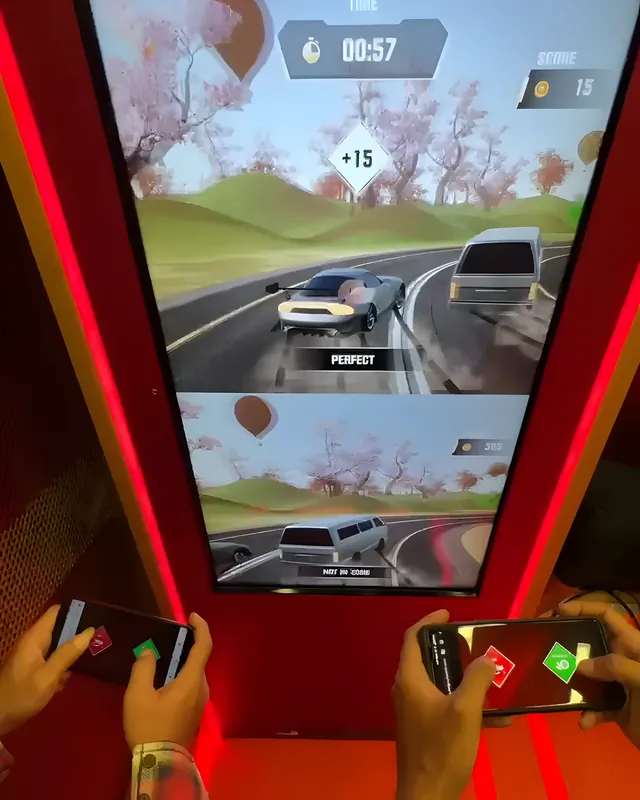
The player scans a QR code on the big screen. A web page opens on their phone and turns it into a controller. Taps, swipes or tilts travel to the screen in real time, so the game reacts the moment the player moves.
This works well for head-to-head play. Two strangers can scan in at the same time, each on their own phone, and race each other on a split screen. Since the phone is theirs, there is nothing to hand out, collect or clean between players.
Body as the Controller
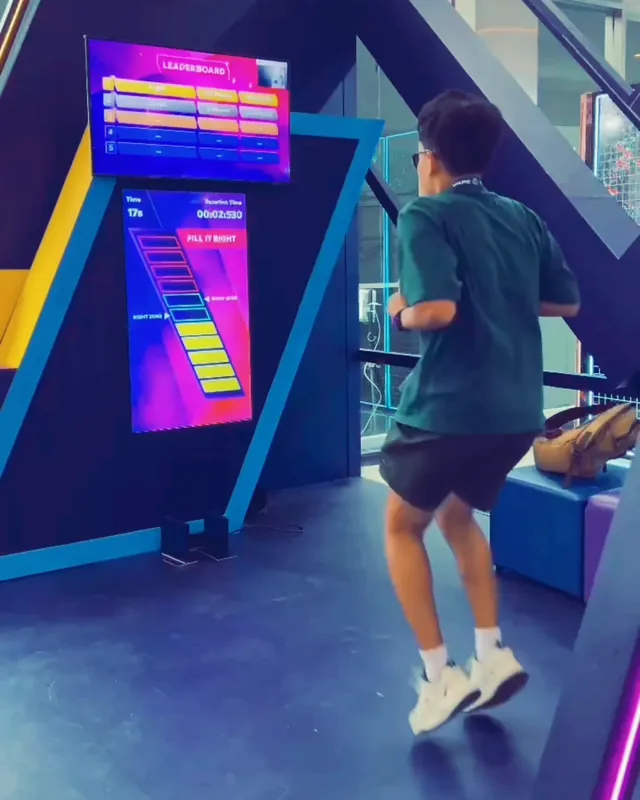
A depth sensor, such as a Kinect, tracks the player's body. Running on the spot, jumping, ducking or leaning becomes the input. Motion games look lively from across the hall, which helps a booth draw a crowd before anyone has played.
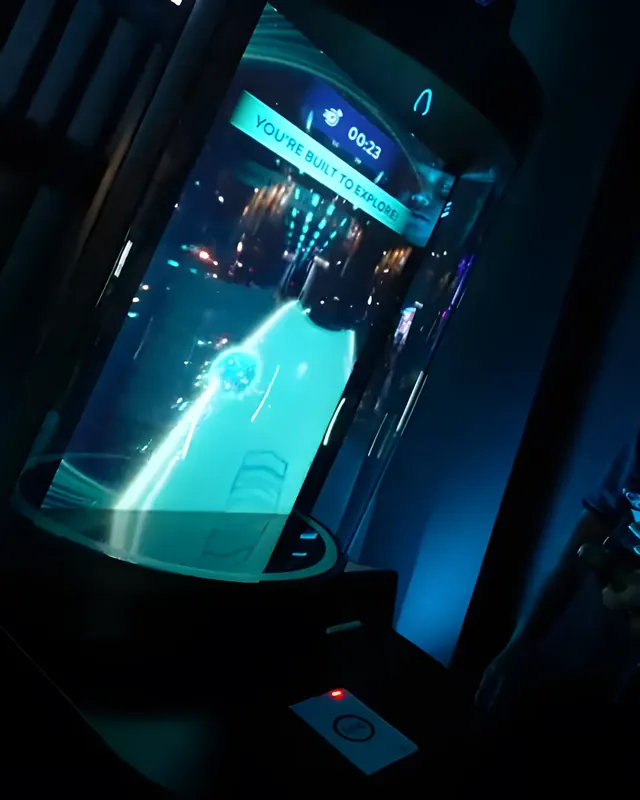
A third option sits in between: a physical object with a gyroscope inside, combined with real-time tracking, so tilting the object steers the game.
| Control type | Best for | What the booth needs |
|---|---|---|
| Phone as controller | Head-to-head racing, quick multiplayer | Big screen, stable internet or local network, QR code |
| Body tracking | High-energy games that draw a crowd | Depth sensor, clear floor area, good lighting |
| Gyroscope object | Skill games with a physical prop | The prop, tracking setup, screen |
Design the Round, Not Just the Game
A game booth succeeds or fails on its round. Four things decide it:
- Time to understand. A visitor watching from a few metres away should get the rules in seconds. One verb works best: run, steer, tilt.
- Round length. Short enough to keep the queue moving, long enough for a comeback to feel possible.
- Players per round. Two players at once roughly doubles the people served per hour, and head-to-head play is fun to watch.
- Reset time. The gap between one round ending and the next starting. Scanning in, picking a car or stepping onto the play area should take only a few seconds.
A simple way to estimate throughput: divide 60 minutes by round length plus reset time, then multiply by players per round. Change any of the three numbers and the booth changes with it.
Leaderboards That Keep People Around
A live leaderboard turns one play into a reason to try again, or to bring a friend. A few choices make it work:
- Show the score instantly, on the main screen, before the next player starts.
- Reset the board daily or per session, so late visitors still have a chance at the top.
- Use a nickname, not a full name, on the public screen.
- Tie prizes to clear rules, such as the top score of the day.
If the brand collects names or contact details for prizes, ask for consent and handle the data under UU PDP No. 27/2022.
What the Hardware Looks Like
- Screen. A large vertical screen suits split-screen racing for two; a wide screen suits a single motion player.
- Sensor or network. Body tracking needs a depth sensor and a clear, well-lit floor area. Phone control needs a reliable connection between phones and the game.
- A computer running the game, the leaderboard and the play counter.
- A backup plan for the venue: a spare sensor, a local network option and a test run on site before doors open.
What Our Game Booths Did
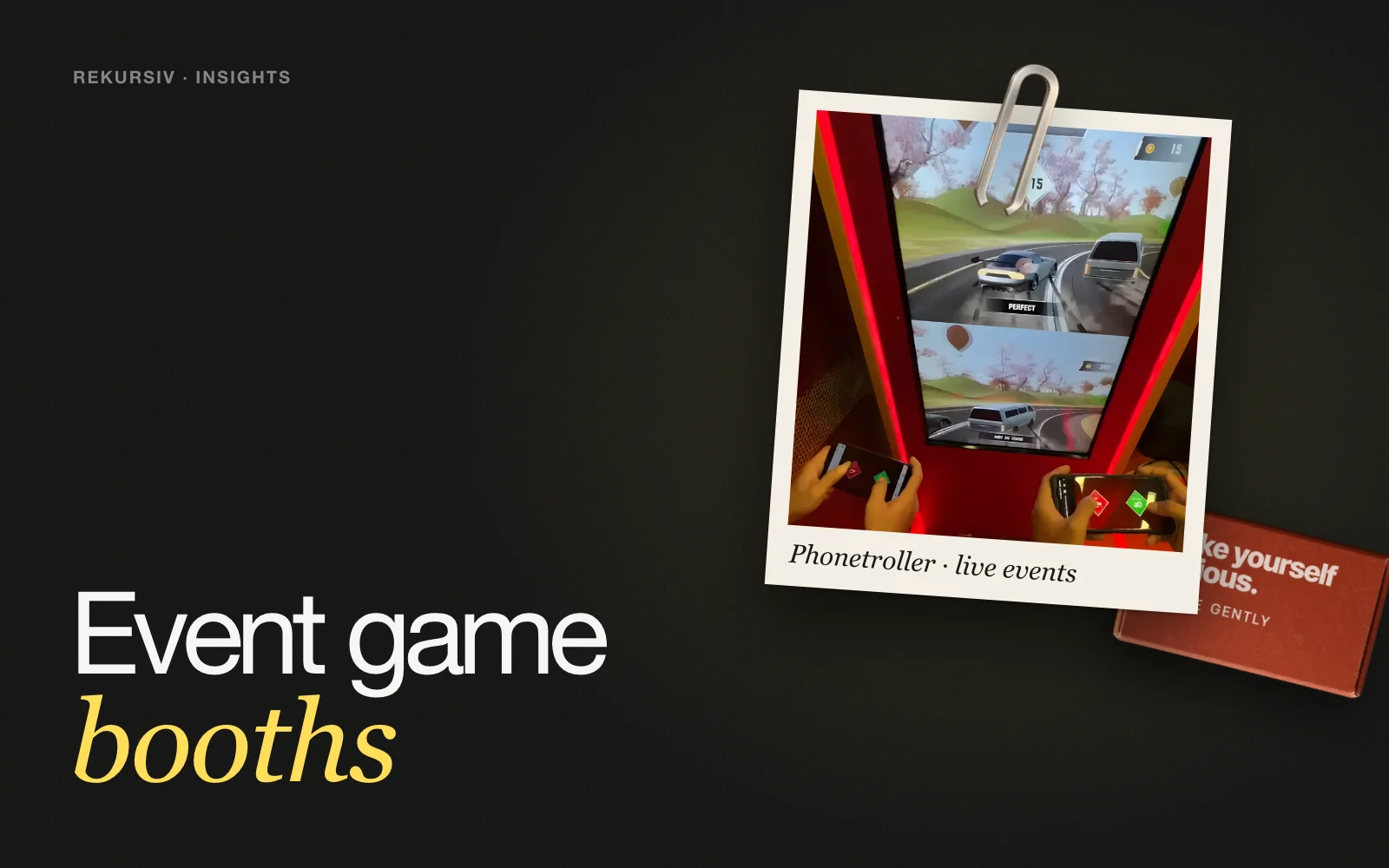
Live eventsSee the project →Phonetroller is a two-player racing game on a big vertical screen. Players scan in, pick a car, and their phones become the controller: tap to steer, overtake and race the clock on a split screen. The goal was to get two strangers playing against each other within seconds, with nothing to install.
Live eventsSee the project →Kinect motion games use a depth sensor: players run on the spot to fill a meter as fast as they can, the score appears instantly and the best runs climb a live leaderboard. The same setup ran as a body-controlled game at a beverage brand's festival booth.
FMCGSee the project →Illumazed, a motion-controlled maze for an FMCG brand, uses a built-in gyroscope and real-time object tracking. Players tilt to guide a glowing ball through the maze. It recorded 1,205 participants, about 402 per day.
How to Start
Start with the event: expected visitors, booth size and how long the booth runs. From there, pick the control type, set a round length that fits the crowd, and agree on what the leaderboard and prizes look like. A short prototype on the real screen shows quickly whether the round feels right.
Planning a game booth for your next event? Contact us.
Frequently Asked Questions
What is an event game booth?
An event game booth is a branded game set up at an event, exhibition or mall, where visitors play a short round on a big screen. The controller is usually the visitor's own phone or their body, tracked by a sensor, so there is nothing to hand out.
How does a phone-as-controller game work?
Players scan a QR code on the screen. A web page opens on their phone and turns it into a controller, sending taps or tilts to the big screen in real time. Nothing needs to be installed.
How does a motion game booth track players?
A depth sensor such as a Kinect, or a camera with body tracking, follows the player's movement. Running on the spot, jumping or leaning becomes the input for the game.
How many people can play per hour?
It depends on round length, players per round and the time between rounds. A shorter round with two players at once serves more people than a long single-player round.
Does a game booth collect personal data?
Only if the brand asks for it, for example a name for the leaderboard or contact details for a prize. Any personal data should be handled under Indonesia's personal data protection law, UU PDP No. 27/2022, with clear consent.
Sources
Project figures from rekursiv case studies