What Is POSM? Point of Sale Materials, Examples and How to Measure Them
What POSM (point of sale materials) means, common POSM examples in Indonesian retail, and how brands measure whether in-store displays get noticed.
In this article
POSM (point of sale materials) are the marketing materials placed inside a store, right where shoppers decide what to buy: wobblers on the shelf, shelf strips, standees, display stands, floor stickers and chiller stickers. Their job is to make a product stand out in the last few seconds before a purchase.
See our AI shelf monitoring service.
What Is POSM?
POSM is everything a brand puts in a store to sell, beyond the product and its packaging. FMCG brands in Indonesia spend large budgets on it every year, from minimarkets to modern trade and traditional stores. Field teams install the materials, sales teams negotiate the spots, and marketing designs them.
You will also hear the term POP (point of purchase). In practice the two are used almost interchangeably. POP usually means the display at the exact spot where the shopper picks the product. POSM is the wider set of materials across the store, including the cashier area and the entrance.
Common POSM Examples
| POSM type | Where it goes | What it does |
|---|---|---|
| Wobbler | Sticks out from the shelf edge | Catches the eye as shoppers walk along the aisle |
| Shelf strip / shelf talker | Along the shelf price rail | Blocks the brand area and shows the promo |
| Standee | Floor, aisle or entrance | Big visual for a launch or campaign |
| Dangler / hanging mobile | Hangs from the ceiling | Visible from far away in the store |
| Floor sticker | On the floor near the shelf | Guides shoppers to the product |
| Chiller sticker | On the fridge door | Brands the cold drinks area |
| Display stand / gondola end | Separate unit or aisle end | Extra space outside the regular shelf |
| Counter display | Near the cashier | Impulse buys while people pay |
Why POSM Is Hard to Manage
A brand can design a beautiful wobbler and print ten thousand of them. What happens next is harder to see:
- Was it installed? Some materials never leave the store storage room, or go up in the wrong place.
- Is it still there? Wobblers fall off, standees get moved, stickers peel.
- Does anyone notice it? A display that is installed perfectly can still be ignored by shoppers.
The first two questions are about POSM compliance. The third is about POSM performance. Most brands only measure the first one, if at all.
How to Measure POSM
- Compliance from photos. Field staff take a photo of the shelf or display during a normal store visit. Computer vision recognises the products and the promo materials, checks them against the plan and flags what is missing.
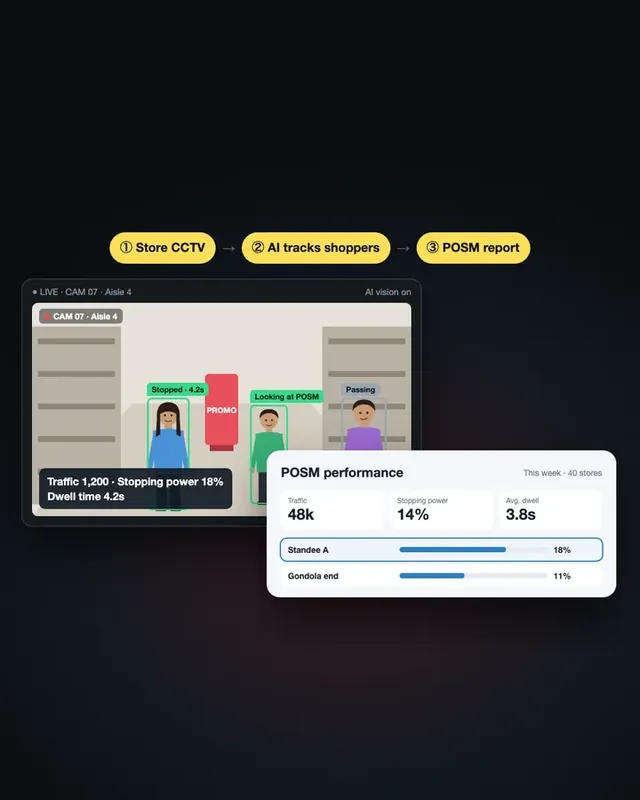
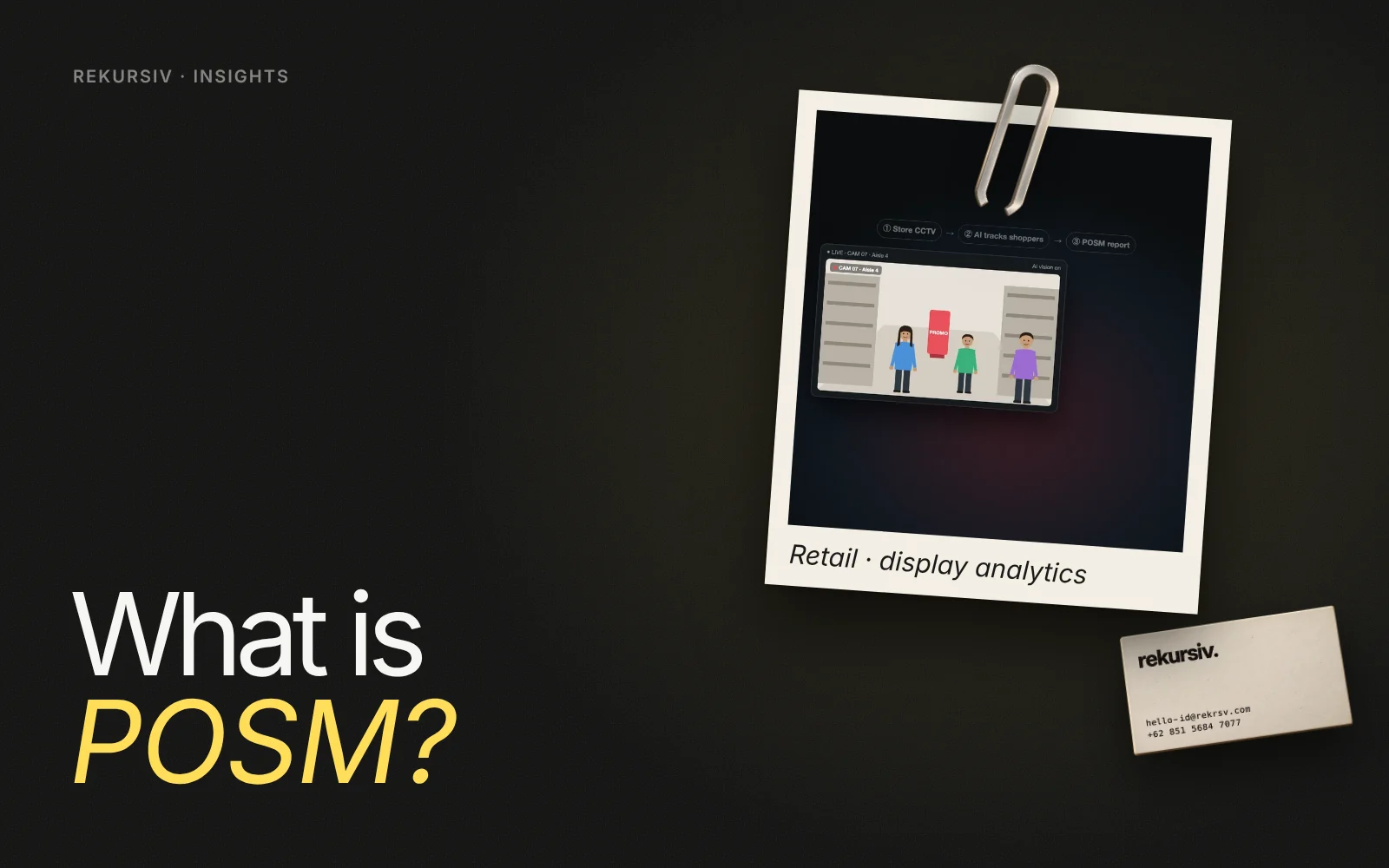
- Performance from in-store cameras. AI vision counts how many people pass a display, how many stop, how many engage, and how long they stay.
- One dashboard. Both sets of numbers sit side by side per store, so you can compare locations and see which display formats work.
What We Have Built
Brands spend on in-store displays without knowing which ones people actually notice. In our in-store display (POSM) analytics project for retail brands, AI vision measured foot traffic, stop rate, engagement and dwell time per display.
One display recorded 1,200 in foot traffic, 18% engagement and an average dwell time of 4.2 seconds. With those numbers per location, the brand could compare stores and put budget where it worked instead of spreading it evenly.
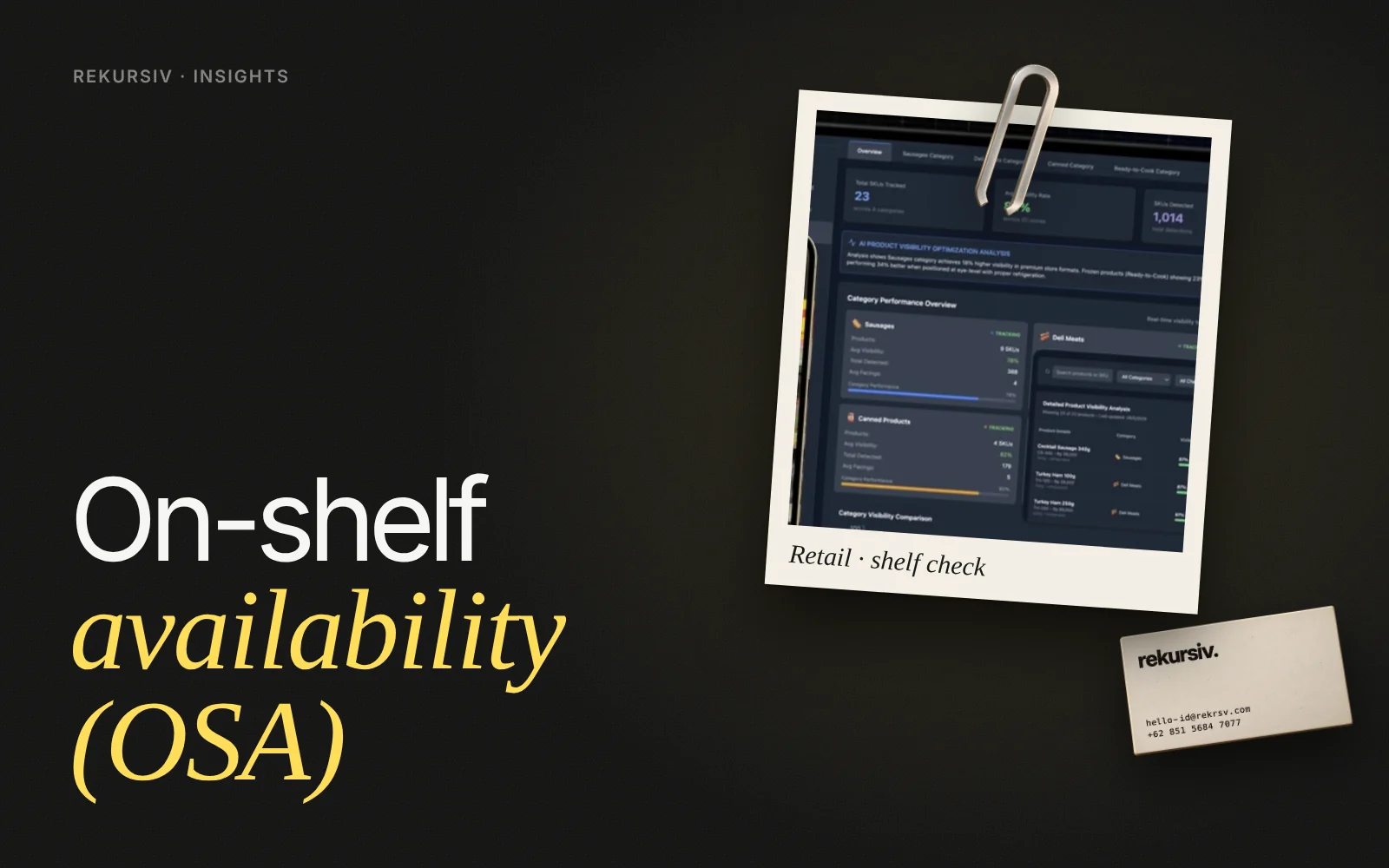
POSM sits next to other shelf KPIs. If you also track product placement, read what is a planogram and our guide to on-shelf availability.
A Note on Privacy
Measuring shoppers with cameras touches personal data. Under Indonesia's personal data protection law, UU PDP No. 27/2022, faces in recordings count as personal data. A responsible setup counts people anonymously, does not store faces, keeps data for a short and clear period, and tells shoppers with visible signage.
How to Start
- Pick one campaign and one POSM type, for example a new wobbler or a display stand.
- Choose 10 to 20 stores, mixing strong and weak locations.
- Agree what "installed correctly" means and collect shelf photos from the field team.
- Add AI vision at a few displays to measure stops, engagement and dwell time.
- Compare results across stores, then move next quarter's POSM budget to what worked.
Want to know which of your displays shoppers actually notice? Talk to us.
Frequently Asked Questions
What is POSM?
POSM stands for point of sale materials: printed or built marketing materials placed in a store, near the product or the cashier, to catch attention and push a purchase decision. Examples are wobblers, shelf strips, standees, display stands and floor stickers.
What is the difference between POSM and POP?
The terms are often used interchangeably. POP (point of purchase) usually refers to the display at the spot where the shopper picks the product, while POSM is the wider set of materials used across the store, including the cashier area.
What are common POSM examples?
Wobblers, shelf talkers, shelf strips, danglers, standees, floor stickers, chiller stickers, gondola end displays, counter displays and branded display stands.
How do you measure POSM effectiveness?
First check compliance: is the material installed in the right place in each store. Then measure performance: how many shoppers pass, stop, engage and how long they look. AI vision can measure both and compare stores on one dashboard.
Is it legal to use cameras to measure displays in Indonesia?
Yes, with care. Faces in recordings count as personal data under UU PDP No. 27/2022, so a good setup counts people anonymously, avoids storing faces and informs shoppers with clear signage.
Sources
Project figures from rekursiv case studies
- In-store display (POSM) analytics Retail brands