Gamification Marketing: Examples, Mechanics and How to Measure It
Gamification marketing examples from Indonesia: the game mechanics brands use, how to pick one for your goal, and the metrics that show it worked.
In this article
Gamification marketing means adding game mechanics such as missions, points, levels and collections to a campaign, so customers come back because they want to, not because an ad reminded them. It works best when the game is tied to something real: a pack, a store visit, or a new message the brand wants people to understand.
See our game development service.
What Is Gamification Marketing?
Gamification marketing borrows the parts of games that keep people playing and puts them into a brand experience. It is not the same as making a full video game. A campaign can be gamified with one clear mechanic: scan a pack to unlock a reward, complete this week's mission, collect the full set, or beat the leaderboard.
The point is behaviour. A one-off promo gets one interaction. A good game loop gets people to return, share and buy again.
Common Mechanics and What They Are Good for
| Mechanic | How it works | Best for |
|---|---|---|
| Collection | Players unlock items and see what is still missing | Repeat purchase |
| Weekly missions | New tasks on a schedule | Bringing people back over weeks |
| Points and one loyalty ID | Every action online and offline earns points | Store visits and retention |
| Quiz or story game | Players learn a message by playing | Rebrands and product education |
| Leaderboard | Scores ranked live or over a period | Events and competition |
| Instant win and redemption | A reward at the end of the game | Lead capture and footfall |
Gamification Marketing Examples from Our Projects
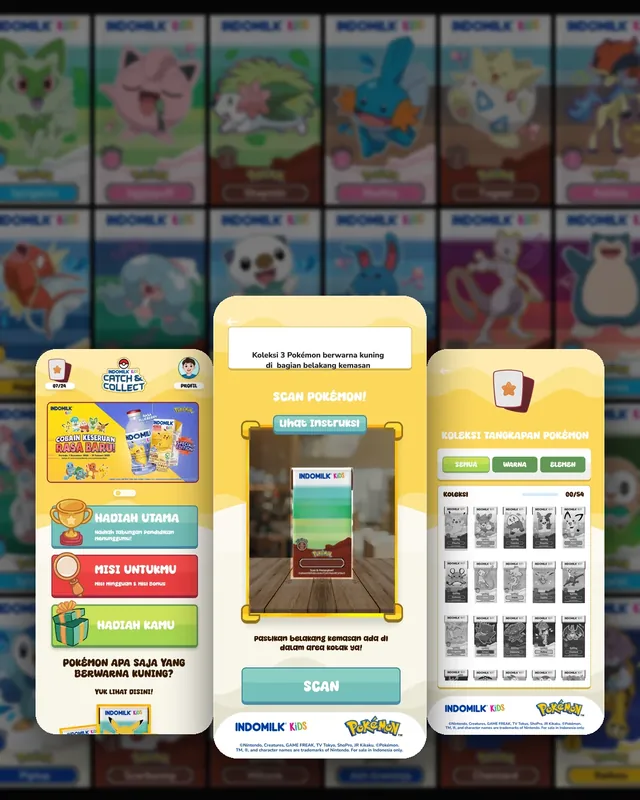
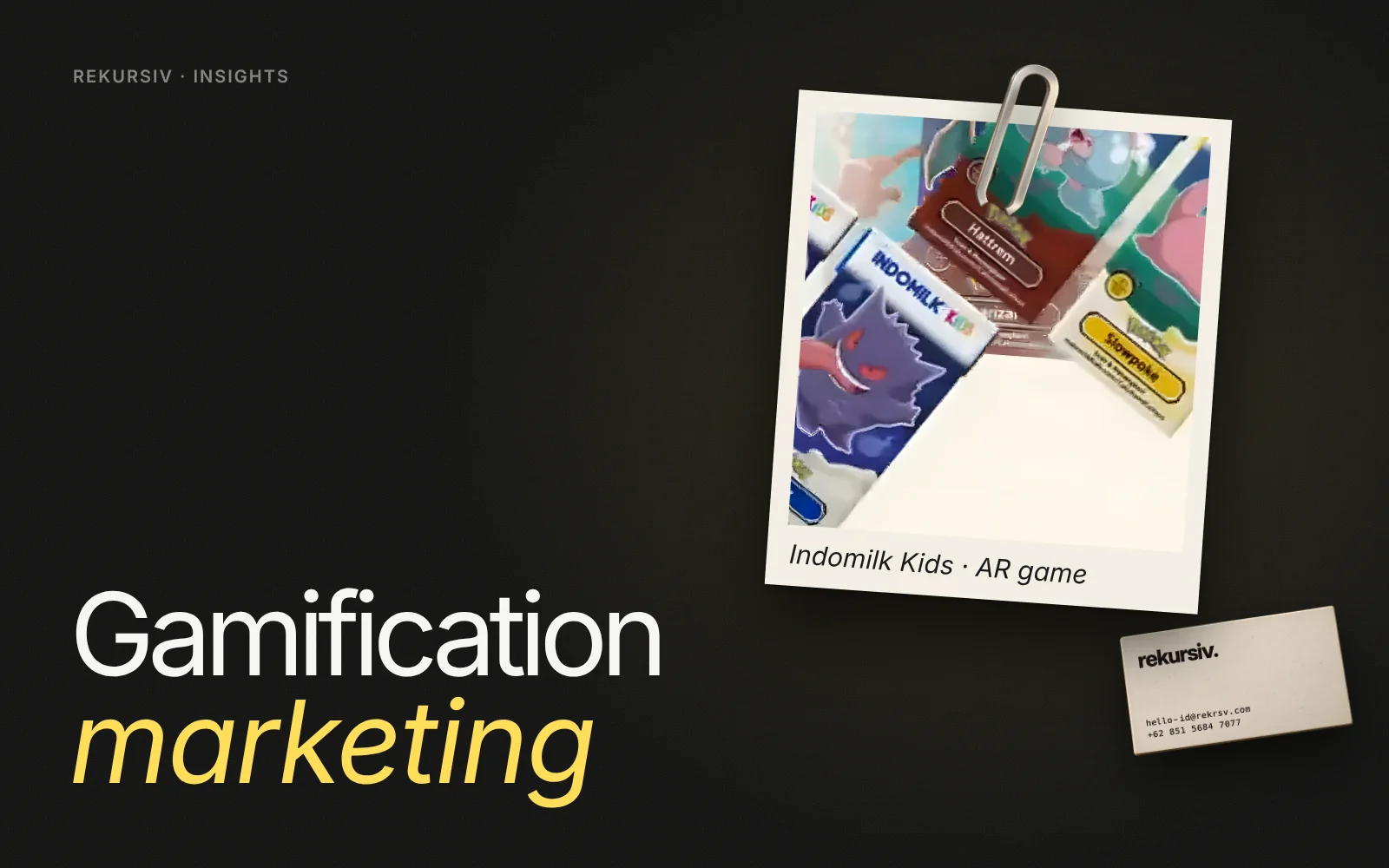
Indomilk Kids × Pokémon. Indomilk Kids wanted repeat purchases in a crowded FMCG market where on-pack promos no longer held kids' attention. Instead of a one-off promo, the pack opened a progress-based web AR game: capture the Pokémon, take on weekly missions and fill a digital Pokédex. The campaign reached 538,000 players, an average session of 2 minutes 2 seconds and 2.13 million website views.
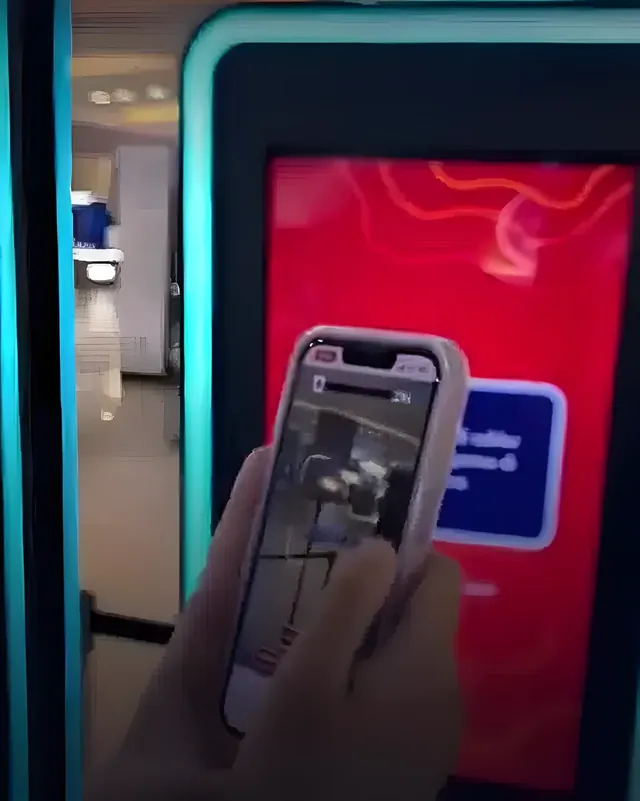
O2O gamification and loyalty. For a loyalty platform, the question was what would happen if every touchpoint became part of one game. Playing online, visiting the venue and buying in store all earn points on a single loyalty ID, so people have more reasons to come back. This is gamification that connects online and offline behaviour.
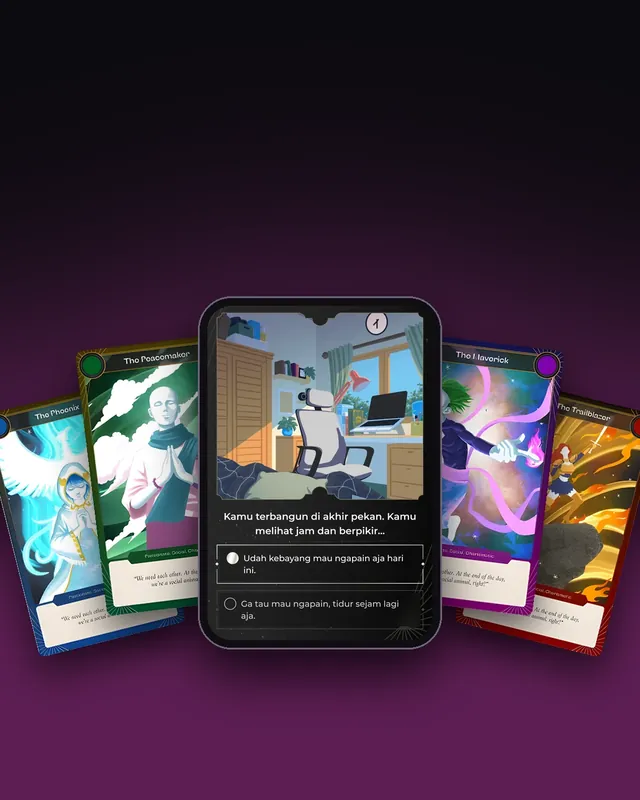
NTMY rebrand quiz. After its rebrand, NTMY wanted an accessible way to spark interest in the new brand and its "Spark" tagline. An interactive quiz did the explaining. It recorded an average session of 2 minutes 59 seconds, a 67% share rate and a 27% bounce rate.
How to Choose the Right Mechanic
- Start from one business goal. Repeat purchase, footfall, data collection or awareness. Each one points to a different mechanic.
- Tie the game to the product. A pack, a receipt, a store or an event booth should be the way in.
- Keep the first minute simple. Open from a QR code in the browser, no install, one clear instruction.
- Plan the return visit. Missions, a collection or a points balance give people a reason to come back next week.
- Make the reward real. Prizes, vouchers or a visible result people want to share.
Metrics That Show It Worked
- Players and completion of the first round
- Average session time, a signal of real attention
- Return rate or missions completed per player
- Share rate, for awareness campaigns
- Business action: redemptions, store visits, repeat purchases
If the game collects names, phone numbers or photos, follow UU PDP No. 27/2022: ask for consent, explain how the data is used and keep only what the campaign needs.
How to Start
Pick one goal, one product touchpoint and one mechanic. Prototype the first minute of play, test it with a few people from your audience, then plan the missions or rewards that bring them back. If you want a team that designs and builds the whole loop, from concept to web AR and the dashboard behind it, talk to us.
Frequently Asked Questions
What is gamification marketing?
Gamification marketing is the use of game mechanics such as points, missions, levels, collections and leaderboards in a marketing campaign, so that customers interact with a brand repeatedly because the activity itself is rewarding.
What are examples of gamification marketing?
A pack you scan to capture a character and complete weekly missions, a loyalty ID that earns points online and in store, a quiz that explains a new brand idea, a stamp rally across booths, or a leaderboard game at an event.
Does gamification marketing work for FMCG brands?
Yes, when the game is tied to the product. For Indomilk Kids, an AR game played from the pack reached 538,000 players with an average session of 2 minutes 2 seconds.
How do you measure gamification marketing?
Track players, average session time, return visits or missions completed, share rate, and the business action you want, such as redemptions, store visits or repeat purchases.
Do players need to download an app?
Not usually. Most campaign games run in the mobile browser through a QR code or link, which removes the biggest drop-off point.
Sources
Project figures from rekursiv case studies
- Pokémon AR packaging Indomilk Kids × Pokémon
- O2O gamification & loyalty Loyalty platform
- An interactive quiz for a rebrand NTMY