NFC for Events: Tap-to-Check-In, Wristbands and Cashless Payments
NFC for events explained: tap-to-check-in badges, NFC wristbands and cashless payments at concerts, with real event figures and how to start.
In this article
NFC for events means guests carry a badge, card or wristband with a small chip and tap it on a phone, tablet or reader. One tap can check them in, open a gate, pay at a bar or unlock a reward, and every tap is recorded with a name and a time. For organisers it replaces printed lists, wristband queues and cash with something faster and easier to count.
See our brand activation service.
Where NFC Fits in an Event
Most events use NFC at one or more of these points:
| Point in the event | What the guest does | What the organiser gets |
|---|---|---|
| Registration and check-in | Taps a badge at the desk | Live attendance, no paper lists |
| Entry gates and zones | Taps a wristband at the gate | Who entered which area, and when |
| Cashless payments | Taps to pay at bars and merch stands | Sales per stand in real time |
| Booths and activations | Taps to join a game or collect a stamp | Participation per booth |
| Rewards and redemption | Taps to claim a gift | Every claim counted once |
You do not need all five. Pick the point where the queue is longest or the data is weakest, and start there.
NFC Check-In: The Front Door
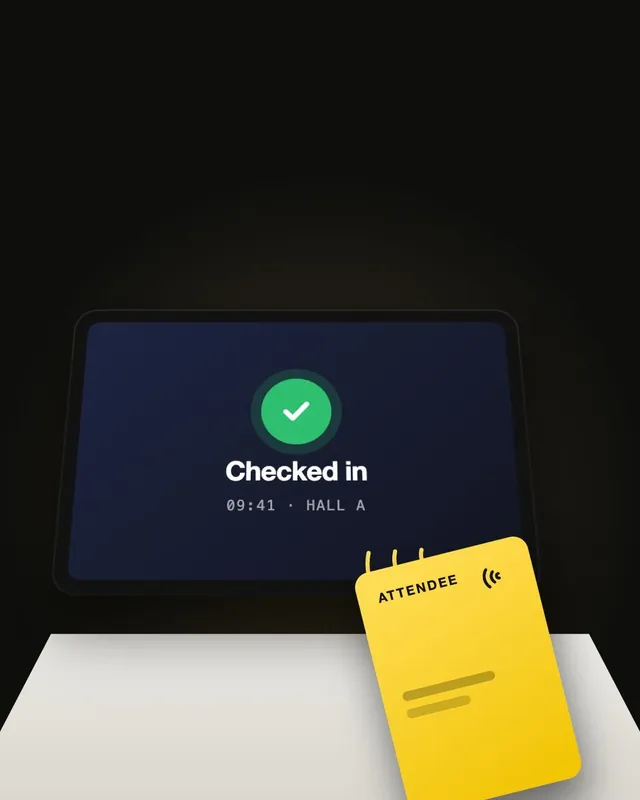
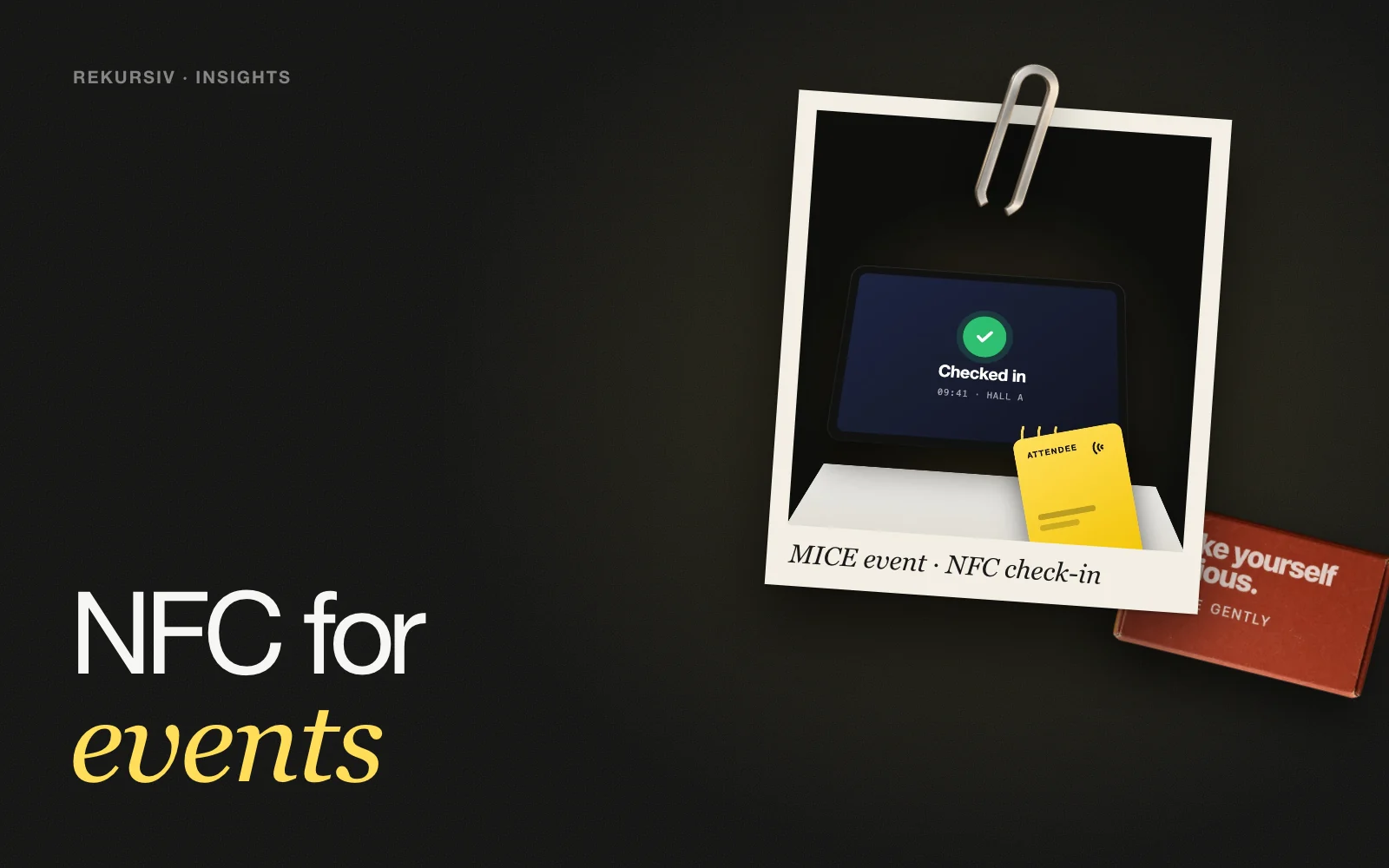
Registration is where guests form their first impression, and where paper lists slow everything down. With NFC check-in, each guest receives a badge linked to their registration. At the desk they tap it on a tablet, see their name confirmed in a moment, and walk in.
MICE eventSee the project →We built this for a MICE event that had to get hundreds of guests through registration without lists, paper or a line at the desk. Guests tap their NFC badge on a tablet, the tablet confirms their name, and the check-in is recorded straight away. The work covered three parts: the NFC check-in itself, a registration app, and attendance data the organiser could use during and after the event.
Wristbands at Concerts
At concerts the wristband is the ticket. It decides who gets in, and with NFC it can also carry a cashless balance or a reward. Before any of that works, though, every guest has to get their wristband, and that step is often where the longest queue forms.
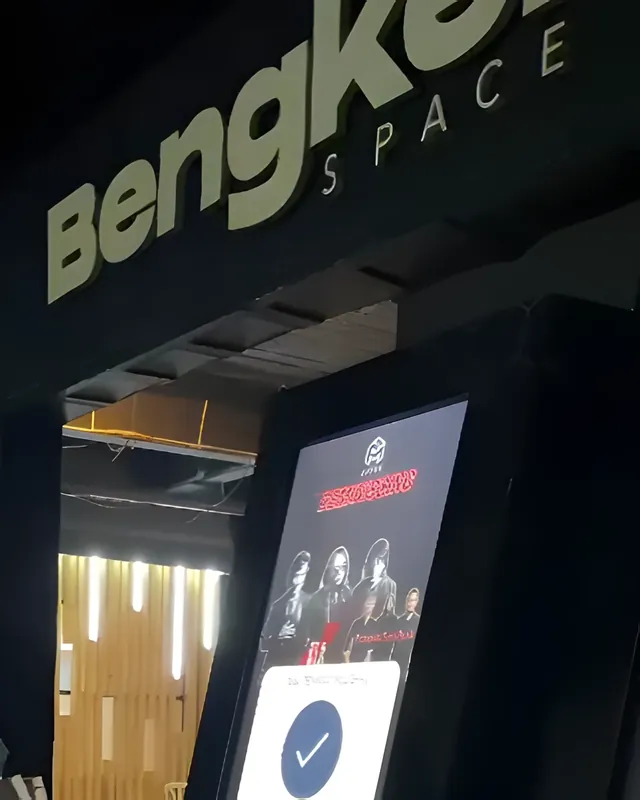
FM ReminiscingSee the project →For FM Reminiscing, concert-goers in Jakarta were losing patience in wristband queues before the show had even started. We began with research, talking to 50 concert-goers and 5 promoters to find the pain points, then redesigned redemption around a self-service distribution machine. The results:
- 1.5k wristbands redeemed
- under 30 seconds per redemption
- 50% less manpower needed
The event promoter described it as "an efficient wristband distribution system" built on a clear understanding of UX. The lesson for NFC wristbands is simple: design the hand-out step as carefully as the tap itself. See also our redemption kiosks.
Cashless Payments with NFC
When a wristband is linked to a balance, guests tap to pay at food, drink and merch stands. Queues move faster than with cash, and organisers see sales per stand as they happen. Plan three things early: how guests top up, how they get unused balance back, and what happens when the network drops. Readers that can store taps offline and sync later keep the bar open.
NFC at Booths and Activations
The same tap works inside the venue. Guests tap a wristband to start a game, collect a stamp or claim a prize at an interactive booth. Because each tap carries an ID, the brand sees how many people joined each booth and who completed the full route, without asking anyone to fill in a form.
Data, Consent and UU PDP
NFC check-in and wristbands collect attendee data: names, contact details and where and when each person tapped. In Indonesia this is personal data under UU PDP No. 27/2022. Keep it simple:
- Ask for consent at registration and say what the data is used for.
- Collect only what the event needs.
- Agree how long the data is kept, and who can see it.
- Store it securely and delete it when the agreed time ends.
How to Start
- Pick one moment to improve first, usually check-in or wristband hand-out.
- Count the current numbers: guests per hour, queue time, staff at the desk.
- Choose the badge or wristband, the readers and the app, and test them with real staff before the event.
- Run it, watch the live data, and compare against your starting numbers.
Planning an event with NFC check-in or wristbands? Tell us about it.
Frequently Asked Questions
What is NFC for events?
NFC (near-field communication) for events means giving guests a badge, card or wristband with a small chip that they tap on a phone, tablet or reader. One tap can check them in, open a gate, pay for food and drinks, or unlock a reward, and each tap is recorded.
How does NFC check-in work?
Each guest gets an NFC badge linked to their registration. At the desk they tap it on a tablet, the tablet shows their name and the check-in is saved straight away, so there is no list to search and no paper to print.
What is the difference between NFC and RFID wristbands?
NFC is a type of RFID that works at a few centimetres, so guests tap on purpose. Longer-range RFID can read from further away, which suits gates with heavy crowds. Most event wristbands for payments and check-in use NFC.
Can NFC wristbands be used for cashless payments at concerts?
Yes. The wristband is linked to a balance or a payment account, and guests tap to pay at bars and merch stands. Organisers see sales per stand in real time and queues move faster than with cash.
Is NFC attendee data covered by UU PDP?
Yes. Names, contact details and attendance records are personal data under UU PDP No. 27/2022. Ask for consent at registration, collect only what you need, and agree how long the data is kept and who can see it.
Sources
Project figures from rekursiv case studies
- NFC check-in for event registration MICE event
- Wristband redemption by machine FM Reminiscing